

Welcome to the latest edition of Energy Source, reporting from New York.
On Wednesday, President Trump tried to brush off the impact of recent losses faced by his party in crucial elections across the US. Voter concerns centered on affordability, especially regarding rising electricity bills in places like New Jersey and Virginia. In response, New Jersey’s new governor, Mikie Sherrill, promised to declare a “state of emergency” to freeze utility rates immediately upon taking office. Abigal Spanberger, who won the governorship in Virginia, stated her commitment to increasing energy production while ensuring that large utility consumers contribute their fair share.
In this edition, we explore a significant report from the Rocky Mountain Institute that discusses the potential of virtual power plants (VPP) to meet the energy demands of data centers without increasing costs for everyday Americans.
Can Virtual Power Plants Help Meet Data Center Energy Needs?
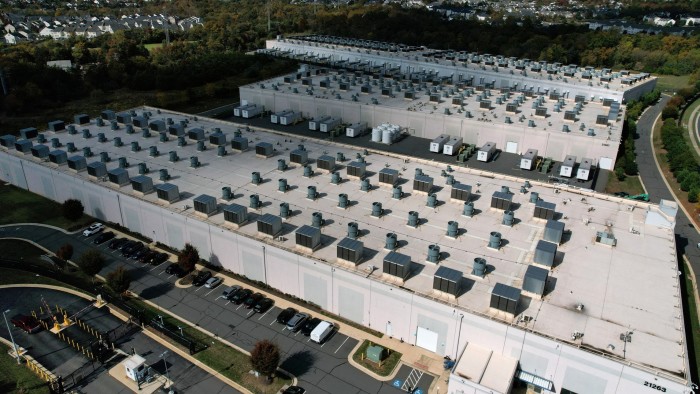
Technology companies are spending vast amounts of money to create and manage data centers across the United States. However, their massive energy use is putting stress on utility companies and the power grid, which are struggling to keep up with this rising demand.
According to a new report from the Rocky Mountain Institute, much of this growing electricity demand could be met efficiently through better management of existing resources, without burdening ordinary Americans with higher costs. Their research indicates that virtual power plants—networks of small energy assets like solar panels and smart thermostats coordinated through software—could help data centers fulfill their energy needs by shifting consumption during peak times. They estimate that VPPs could eventually meet over 20% of peak energy demand in the US by 2030.
“If we shift demand for just a few hours instead of building new power plants, we can enhance the efficiency of the whole energy system,” explained Jesse Cohen, a senior associate at RMI. “This is generally more economical.”
Rather than waiting years for new natural gas plants or renewable energy projects to be completed, VPPs can be implemented quickly to assist data centers with their energy needs right now. By investing in VPP programs, data centers can help protect households and small businesses from future electricity price hikes.
RMI outlined various ways data center operators could support VPPs. One approach allows utilities to procure VPP services for data centers, helping them absorb costs that would otherwise fall on consumers. Another method would involve data centers directly funding VPP projects, like home batteries or smart thermostats, facilitating energy saving during peak demand times.
Voltus, a VPP provider, recently launched a program to allow data centers to fund energy flexibility projects benefiting their communities. Meanwhile, Cloverleaf Infrastructure, which focuses on clean-energy data center sites, is exploring partnerships with Voltus for implementing VPPs.
Brian Janous, a Cloverleaf co-founder, notes that there’s a common misconception that data centers operate continuously. He argues that the grid is usually underutilized, and increasing flexible resources could enhance connectivity for more data centers.
Additionally, RMI proposed a model where utilities can establish flexible agreements with data centers investing in VPPs so that if the utility requests a reduction in load, the VPP could decrease energy use in nearby areas, allowing more grid flexibility.
As the industry explores the best ways to adopt VPPs, interest from data center operators in these systems continues to grow.
James Johnston, CEO of Piclo, mentioned that data centers have significantly influenced demand for their platform as many seek out flexible energy resources. He remarked that traditional methods are insufficient for meeting the sector’s power needs, emphasizing the speed and cost-effectiveness of deploying smaller-scale energy assets.
Job Moves
- Golden State Mining appointed Keith Middleton as CEO and Managing Director.
- Galilee Energy named Joseph Graham as CEO.
- Elixir Energy appointed Justin Ferravant as CFO.
- Energy World Corporation named Joseph Meyer as CFO.
Power Points
- Australia has initiated a plan to require energy companies to provide free electricity to households during the day, aiming to shift away from coal and gas by utilizing excess solar energy.
- Danish wind turbine manufacturer Vestas announced a share buyback and reported improved profits, with CEO Henrik Andersen acknowledging the loyalty of shareholders during difficult times.
- Concerns about potential pressure from the Trump administration loom over the COP30 climate summit in Brazil, with fears that US officials could encourage other nations to withdraw from the Paris Agreement.
This edition of Energy Source is compiled by a team of writers and editors dedicated to keeping you informed about energy developments.