

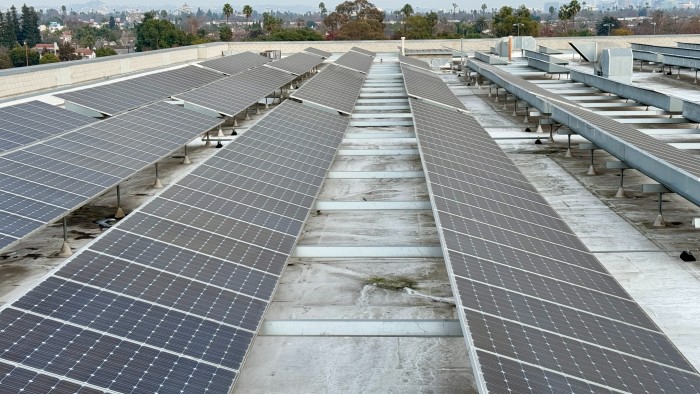
Pine Gate Renewables, a solar power generator based in North Carolina, has filed for Chapter 11 bankruptcy, marking a significant development in the renewable energy sector. This is the largest bankruptcy for a renewables developer following recent cuts to solar and wind tax credits initiated during Donald Trump’s administration.
The company filed for bankruptcy protection in Texas on Thursday, reporting assets and liabilities between $1 billion and $10 billion. Among its creditors are major firms like Carlyle and Brookfield, from which it borrowed $150 million and $300 million, respectively, this year.
In a statement made to the court, Pine Gate highlighted that the tax credit reductions have caused serious challenges for solar power development. The company indicated that the regulatory environment turned harsher, especially with limitations on sourcing equipment from certain foreign countries, particularly China. Pine Gate stated, “Legislative and regulatory challenges have significantly slowed solar power development.”
The reduction in tax credits, coupled with rising costs and declining interest in solar investments, created immense pressure on Pine Gate’s financial position, leading to a collapse in the value of its collateral assets.
Both Brookfield and Carlyle have several projects tied to Pine Gate; Brookfield has 22 projects, while Carlyle has nine. Pine Gate has also announced that its lenders plan to acquire its assets, including an independent power producer platform and a development pipeline featuring over 100 solar projects across the U.S., expected to generate more than 30 gigawatts of power.
While Pine Gate’s operational arm, ACT Power Services, is not included in the bankruptcy proceedings, the company plans to sell this division.
The fall of Pine Gate has raised concerns about potential further bankruptcies in the renewable sector. This year alone, 14 companies have already declared bankruptcy, suggesting a troubling trend that may surpass last year’s total of 15.
During the era of President Joe Biden’s Inflation Reduction Act, many renewable developers expanded rapidly, often taking on projects that are now seen as unviable. Pol Lezcano, a director at CBRE, noted that during the boom period, lending was readily available, leading to an unrealistic development landscape.
Additionally, industry experts are pointing to challenges with permitting and interconnection as major obstacles. Environmental reviews and necessary infrastructure upgrades for the grid are causing delays, with the American Clean Power Association reporting that it could take up to four years to complete these processes.
Kevin Phillips from PEI Global Partners remarked that the market is beginning to face the realities of grid interconnection issues, stating that projects often drain cash until they can start generating electricity.