

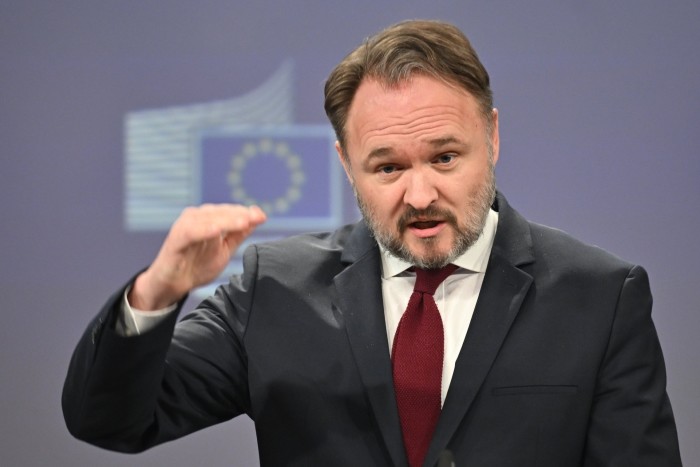
The European Union (EU) is looking to the United States for increased natural gas supplies as it navigates energy challenges, particularly amid tariffs imposed by the U.S. government. Dan Jørgensen, the EU’s energy commissioner, stated that while the region aims to boost renewable energy, it may also consider purchasing more liquefied natural gas (LNG) from the U.S. to ease tensions with President Trump.
The European Commission is optimistic about hitting a record for renewable energy capacity by 2025, despite ongoing global economic struggles. Jørgensen highlighted that this green energy initiative does not rule out potential agreements for more U.S. LNG, especially in the wake of Trump’s recent reduction of tariffs, which had been temporarily paused.
Trump suggested on Monday that the EU should invest about $350 billion in U.S. energy to lessen the trade deficit, while he rebuffed an offer from Brussels for a tariff deal that covered industrial goods and cars. The U.S. is already a major player in the EU’s energy supply, contributing significantly to the bloc’s LNG imports.
Jørgensen expressed that any agreements would need to align with the EU’s commitment to transitioning to greener energy. He mentioned discussions with U.S. Energy Secretary Chris Wright about this potential increase while acknowledging that the EU has limited power to enforce negotiations.
The Commission predicts that Europe will install an unprecedented 89 gigawatts of renewable power capacity by 2025, comprising wind and solar energy. Despite challenges such as lengthy permit approval processes and grid connection issues, Jørgensen emphasized the urgency of moving away from reliance on Russian fossil fuels.
He stated, “The high energy prices we face are unsustainable,” noting that the EU has spent more on Russian fossil fuels than on humanitarian aid for Ukraine since the onset of the conflict in 2022.
To encourage investment in renewable energies, Jørgensen is set to unveil new renewable capacity figures at an industry conference in Copenhagen. Meanwhile, Rasmus Errboe, CEO of Ørsted, the world’s largest offshore wind company, warned of a potential downturn in Europe’s wind sector due to escalating costs and supply chain challenges.
The EU has initiated actions in response to the tariffs announced by Trump, as this trade dispute escalates into a significant trade conflict. WindEurope, an industry association, expects new wind capacity in Europe to rise by 34% this year but notes delays in installations from the previous year.
The solar industry has also reported a drastic slowdown, with growth rates decreasing from 53% in 2023 to just 4% last year, largely due to similar infrastructural hurdles.
Jørgensen remarked that the current economic turmoil could position Europe as an attractive destination for businesses seeking stability. He reiterated the EU’s commitment to advancing its green agenda, advocating for streamlined rules to expedite the approval of renewable projects from years down to just six months.