

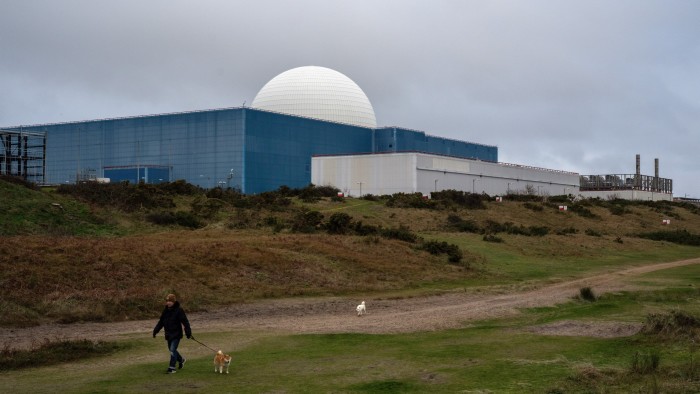
Enthusiasm is growing for small modular reactors (SMRs) as they offer a potential solution to the challenges faced by larger nuclear power plants, which have a reputation for exceeding budgets and facing delays in construction. For instance, the Sizewell C, a planned 3.2 gigawatt plant in eastern England, is expected to cost around £40 billion—double the initial estimate made in 2020.
SMRs bring a promising approach as they are mostly manufactured in factories, which could significantly reduce construction times and overall costs. These reactors typically have a capacity of less than 300 megawatts, although some designs may be larger. Rolls-Royce has projected that the initial construction cost for a 470MW SMR will be approximately £2.5 billion, with expectations that costs could drop to about £2 billion for subsequent units.
The advancement of artificial intelligence (AI) may also propel the adoption of SMRs, as industry leaders like Amazon and Alphabet, Google’s parent company, explore methods to power their energy-intensive data centers. The UK is keen on leveraging AI in energy management, which includes an energy council focused on investing in SMRs. Other countries such as Sweden, the Czech Republic, and the United States are similarly interested in this technology.
However, investing in SMRs comes with uncertainties. Most projects are unlikely to be operational before the 2030s, and rising interest rates and supply chain costs could complicate financial projections. Experts, like Tom Betts from Aurora Energy Research, have noted that many costs will only become known once specific planning and consent processes are complete.
Rolls-Royce is among four companies competing for UK government endorsement of their SMR designs, with a decision expected by 2029. While external analyses suggest that SMRs are initially more expensive, some reports indicate that if costs could be reduced to around $120 per megawatt hour by 2030, they could compete with larger nuclear plants and even fossil fuels like gas and coal.
Typically, the initial funding for these first-of-a-kind SMRs is expected to come from government sources. Over time, private investors may become interested as the industry matures. Although the sector is still in its early stages in Western countries, as challenges are addressed, it’s likely that small modular reactors will play a more significant role in future energy solutions.