

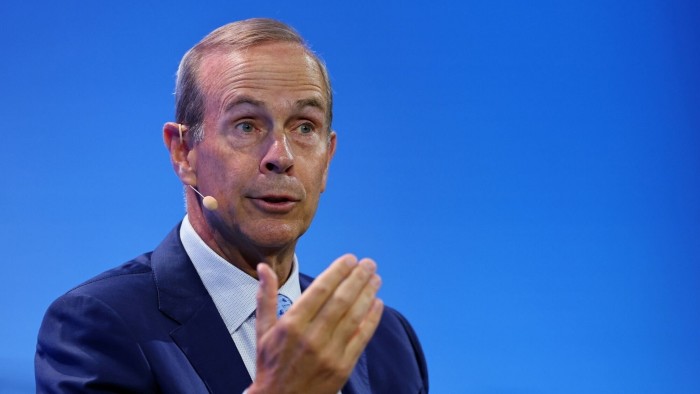
Energy companies are urging the White House for a more stable approach as they’ve faced a series of tariff threats and fluctuating policies recently. Mike Wirth, the CEO of Chevron, expressed this concern during CERAWeek, a significant annual gathering for the oil industry, held in Houston. He emphasized that swinging between extreme policies isn’t beneficial and called for “consistent and durable policy.”
Chevron has been significantly impacted by the shifting policies of the current administration. For instance, President Trump recently announced plans to revoke a license that has allowed Chevron to export oil from Venezuela since 2022. Wirth mentioned that energy policies should be established through legislation to ensure they are reliable and not susceptible to abrupt changes by future administrations.
During a private dinner ahead of the conference, energy executives made a similar plea to Chris Wright, the U.S. Secretary of Energy. They conveyed to him that the White House should focus more on legislative measures rather than relying heavily on executive orders to achieve its objectives. Wright also met with leaders from the oil and gas sectors for discussions the following morning.
This request for a more predictable energy policy comes after a wave of executive actions that have seen the U.S. exit the Paris climate agreement, reverse previous approvals for liquefied natural gas terminals, relax regulations on oil and gas production, and suspend new leases for offshore wind projects. Simultaneously, the White House has also announced, paused, and re-announced tariffs affecting energy supply chains in the U.S. from Canada and Mexico.
Aamir Paul, president of Schneider Electric North America, highlighted the need for certainty concerning these unpredictable tariffs. He suggested that renegotiating the United States-Mexico-Canada Agreement would be a constructive step to create a stable environment for investment. Paul warned that ongoing uncertainty could hinder investments and slow efforts to bolster the U.S. electricity grid.
Wright acknowledged concerns over uncertainty at CERAWeek, promising that the administration intends to expedite its energy policies in the near future. He mentioned a recent approval for a new LNG export terminal on the Gulf Coast, which is expected to handle 1.8 billion cubic feet of gas per day. While he noted there is no specific target for lowering oil prices, Wright believes that achieving lower prices would benefit both Americans and the global community.