

Welcome to Energy Source, where we turn our attention to the shifts in the energy sector in light of recent U.S. tariffs on imports from Canada and Mexico. The new policy imposes a hefty 25 percent tax on many goods, but oil products from Canada will face a slightly lower duty of 10 percent. This is due to U.S. refineries needing about 4 million barrels a day of Canadian crude to produce various petroleum products.
Experts are predicting that these tariffs could lead to higher gasoline prices, especially for consumers in northern Midwest states. The ongoing threat of a trade war has cast a shadow over oil markets, and recent news of OPEC+ increasing production has driven crude prices down to their lowest in three months.
Today, we are focusing on Peru and its troubled national oil company, Petroperú, which has had to rely on government bailouts after experiencing difficulties with a major refinery project.
Who Will Save Petroperú?
In December, the Peruvian government declared a state of “environmental emergency” following an oil spill linked to its main refinery on the Pacific coast. This incident is just one of many challenges facing Petroperú, which recently spent about $6.5 billion in a long-overdue modernization of its Talara refinery, wrapping up just this year. Unfortunately, the project ended up taking longer and costing more than expected, leaving the company in significant debt.
The government has stepped in multiple times to provide financial aid; last year alone, it offered two bailout packages exceeding $1 billion and took over debt payments after the company’s board resigned, calling the situation “broke” and “unsustainable.” Despite these troubles, Petroperú continues attracting interest from international investors eager for high returns because they trust the government will not let the company fail.
“I don’t believe Peru will allow their national oil company to go under,” said Schreiner Parker from Rystad Energy. However, he acknowledged the political chaos in Peru, marked by seven presidents in just as many years, adding uncertainty to the future.
Amid this instability, there are varying possibilities for how things may unfold for Petroperú. The company aims to regain profitability by 2025, largely relying on increased output from the revamped Talara refinery, which has advanced its capacity from 60,000 to 90,000 barrels per day.
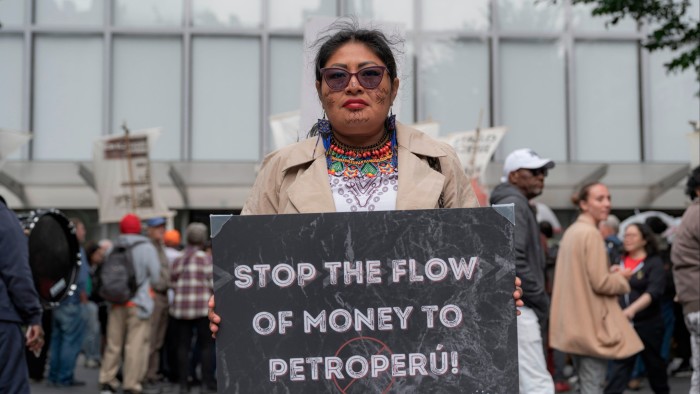
Yet, the pathway is fraught with challenges. Many local communities oppose increased production due to historical pipeline leaks that have harmed the environment. Environmental groups allege that Petroperú’s financial struggles are pushing the government to double down on fossil fuel investments, which could lead to conflicts over land and environmental degradation.
“Investors and bondholders hold significant influence over Petroperú’s future. They might drive the company’s reliance on fossil fuels while complicating the country’s efforts to transition to cleaner energy sources,” noted Amazon Watch, a non-profit organization.
Petroperú has not commented on the current situation.
In summary, the intersection of economic needs, environmental concerns, and political instability will play a critical role in determining the future of Petroperú and its ability to navigate its debt crisis while contributing to Peru’s energy landscape.