

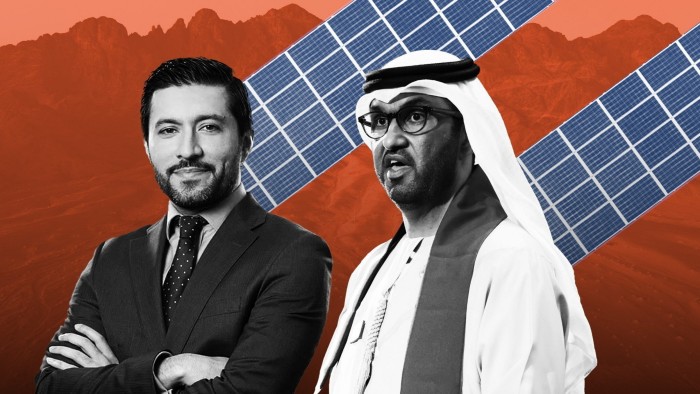
The United Arab Emirates (UAE) has made an ambitious leap in renewable energy, transitioning from modest solar ambitions to a massive initiative this month. At a key trade fair in Abu Dhabi, Masdar, the state-run renewable energy firm, unveiled plans to construct a $6 billion solar power plant with a staggering capacity of 5 gigawatts, complemented by over 19 gigawatt-hours of battery storage—marking it as the largest project of its kind.
Expected to be operational in two years, this new solar plant will provide a stable output of 1 gigawatt, sufficient to power around 700,000 homes even during nights or cloudy days when reliance on gas plants is minimized. Sultan Al Jaber, Masdar’s chairman, emphasized that this development could revolutionize renewable energy, transforming it into a reliable power source.
While the UAE announced this ambitious project, Saudi Aramco, the world’s leading oil company, revealed plans to begin lithium production—a crucial element in battery technology—potentially by 2027.
Traditionally, the Gulf nations have depended heavily on their rich oil reserves. However, as part of a broader trend, both the UAE and Saudi Arabia are keen to enhance their renewable energy usage, viewing it as an economic strategy to harness solar power, wind energy, and battery technologies for domestic consumption, thereby conserving more fossil fuel for export.
Mazin Khan, Masdar’s CFO, stated that the new solar and battery project will likely be cost-competitive with conventional natural gas energy for the first time. He pointed out the region’s advantages: abundant sunlight, productive manufacturing relationships, and a competitive regulatory environment.
Numerous regional and international companies are competing for contracts related to renewable projects in the Gulf. Players in the bidding include Masdar and Saudi Arabia’s Acwa Power, along with Asian firms like South Korea’s Kepco and Chinese entities such as Jinko Power.
In terms of renewable energy capacity, the Middle East lags behind Europe, the US, and China, accounting for less than 1% of global renewable capacity according to the International Renewable Energy Agency (Irena). However, it is one of the fastest-growing regions for renewable energy outside of China.
Research shows that in five years, renewables may make up 30% of the total energy capacity in Bahrain, Iraq, Kuwait, Oman, Qatar, Saudi Arabia, and the UAE. The Gulf region is investing surplus oil and gas revenue into diversifying its energy sources and has ideal conditions for solar power production.
Kuwait is also making strides, having recently awarded a contract to create 17GW of renewable energy capacity and establish 25GW of green hydrogen by 2050, despite its current limited renewable capabilities.
As the Gulf moves rapidly towards integrating renewable energy into its power grid, challenges remain. Experts caution that existing infrastructure is primarily designed for fossil fuels, which could complicate the shift to solar energy. However, the swift adaptations seen in the UAE highlight the potential for quick developments in the region.
The surge in renewable projects also connects to ambitions in artificial intelligence and green hydrogen. Countries within the Gulf region, using their unique advantages, are positioning to be leaders in the renewable energy landscape, catering both to local needs and international markets.