

Good morning!
In the latest developments from Brussels, officials are reassessing their investigations into major tech companies amidst intense lobbying efforts regarding digital regulations. This review is tied to the new five-year plan of the European Commission and coincides with tech leaders urging US president-elect Donald Trump to oppose the EU’s enforcement actions.
Turning our attention to energy markets, concerns are growing that the last operational Russian gas connection to Europe may be jeopardized due to the ongoing conflict in Ukraine. This news comes as Ukraine reportedly employed drones to target a section of the pipeline that supplies gas to the EU, causing gas prices to increase by over 7%.
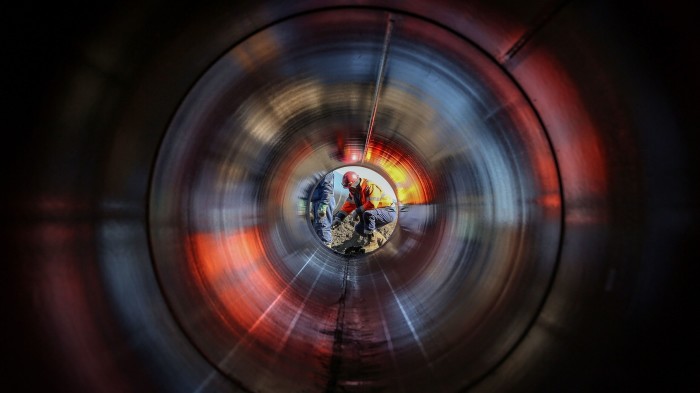
The TurkStream pipeline, which runs through Turkey, is the final route supplying Russian gas to central Europe and the Balkans. Notably, it has remained significant for Hungary, the only EU nation still reliant on substantial Russian gas contracts following the invasion of Ukraine. This pipeline is crucial, especially after the gas supply through Ukraine was halted recently.
Russia’s defense ministry stated that Ukraine attempted a drone strike on a compressor station in southwestern Russia that services this pipeline, claiming all drones were intercepted. However, Ukraine did not provide a response or verification of this incident. Following the announcement, gas prices surged by 7.2%, despite the station reportedly continuing its normal operations.
The Kremlin has labeled these actions a form of “energy terrorism” by Kyiv, and their spokesperson likened it to a series of sabotage acts. This disruption is timely as European energy markets are in a precarious state; Brussels is seeking to increase imports of US liquefied natural gas (LNG) to navigate the situation and mitigate potential trade tariffs threatened by Trump.
Hungary, in particular, stands out as the last major holder of Russian pipeline gas in the EU. Their foreign minister stated that any threats to their energy supply will be seen as an attack on their sovereignty. Despite a broader EU goal to eliminate Russian fossil fuel imports by 2027, Hungary remains committed to a long-term contract for 4.5 billion cubic meters of Russian gas annually, with a potential increase announced last month.
In other news regarding transportation, the use of e-scooters in Italy has plummeted by 30%. This decline follows new regulations introduced to ensure safer usage and curb reckless driving behaviors. The Italian government has mandated that riders wear helmets and have insurance coverage to rent scooters.
Around 55,000 e-scooters are available in major Italian cities, but complaints about abandoned scooters cluttering the streets have led to these stricter rules. Other European cities have imposed similar speed limits and designated parking areas to manage the situation.
Despite the intention to enhance safety, these regulations have raised costs for scooter operators, leading to a sharp decline in rentals and sales. The Alliance for Sustainable Mobility projects that the new restrictions may lead to a loss of approximately 300 million euros in revenue over the next five years and threaten about 1,200 jobs in the sector.
Today, leaders from NATO countries bordering the Baltic Sea are set to meet for a summit in Helsinki, marking a significant diplomatic event.
Stay informed on the latest developments by following us.