

Hello! Today we’re bringing you the latest updates from the energy sector, straight from London. Wednesday proved to be quite an eventful day for the UK’s electricity market.
The National Energy System Operator, which manages the national grid, had to instruct power generators to step up their output as wind speeds fell and imports from cables were already nearing their limits. According to Phil Hewitt, director at Montel Analytics, this was the “tightest day so far this year.” Gas power stations were even requesting exceptionally high prices to generate power, with one facility asking for £5,750 per megawatt-hour, while the day-ahead wholesale price hovered around £97 per megawatt-hour.
Fortunately, the market responded in time, keeping the lights on. By 8 PM on Wednesday, gas accounted for 57.7% of electricity generation in Britain, with wind contributing 8.6% and interconnectors making up 11.7%.
This situation highlights the challenges of maintaining a reliable electricity system as it increasingly relies on intermittent renewable energy sources—a challenge that many other nations are also facing.
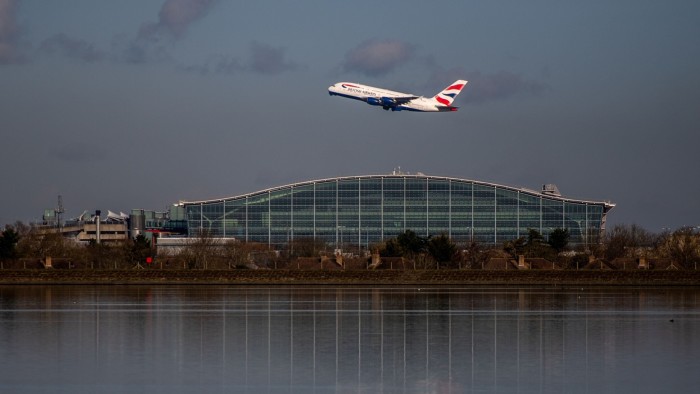
Today, we’ll also cover an important development in the energy transition: the new mandates for sustainable aviation fuel (SAF) that have taken effect in the EU and the UK. Politicians are hopeful that these changes will encourage the aviation industry to move away from fossil fuels. The big question is: will it work?
Europe’s New Push to Decarbonise Flying
In Europe and the UK, the start of the year is usually seen as a time for resolutions. For the aviation sector, it marks the beginning of adhering to new regulations aimed at reducing reliance on fossil fuels.
Fuel suppliers at UK and EU airports are now required to ensure a portion of sustainable aviation fuel is used for flights. This fuel could come from sources like cooking oil, municipal waste, or hydrogen—anything that isn’t fossil-based.
In their first year, these mandates are relatively modest, set at 2% of the total jet fuel used. However, the goal is to increase this requirement to 10% in the UK and 6% in the EU by 2030, and even higher beyond that. This signifies a new chapter in the energy transition, as governments press the aviation industry to meet strict decarbonisation targets.
The costs associated with carbon dioxide emission certificates are also expected to rise, making it more expensive to pollute. Although producing sustainable aviation fuels is more complicated and costly than conventional fuels—a factor that has hindered demand—policymakers believe that creating a market demand will stimulate supply growth.
As Eirik Pitkethly, BP’s vice-president of regulatory affairs for bioenergy, notes, “[The mandates] provide confidence to investors, clear market opportunity—a driver to supply a fundamentally new product.” However, the outlook for future supplies has raised some concerns, as several SAF projects were canceled or put on hold last year due to high costs and limited feedstock availability. For instance, Shell paused plans for a biofuels plant in Rotterdam due to “market conditions.”
Research from consultancy Wood Mackenzie shows that almost 2 million tons of SAF production capacity was halted in 2024. This yearly target in the UK could reach around 230,000 tons, making the future supply chain critical.
Compounding the issue, producing synthetic fuels—required to meet future mandates—remains both complex and expensive. Companies like Shell and Uniper have also backed away from planned projects in Sweden.
What It Means for Airfares
Monika Rybakowska, a policy director at Airlines for Europe, says that this year will serve as a “learning year” for the industry. However, she expresses concern about the potential “green premium” that could emerge as companies pass costs onto consumers.
“The aim isn’t to make flying more expensive; it’s certainly not meant to cap air travel,” she emphasizes. “It’s about decarbonising aviation—finding ways to improve while keeping costs down.”
Analyses from the UK government suggest that the mandates might increase the average price of one-way tickets by £9.40 by 2040. If supply challenges arise, ticket prices could jump by as much as £37.80. However, the government indicated it could revise the mandate to avoid such sharp increases.
Tim Alderslade, CEO of Airlines UK, emphasizes the importance of getting policies right to minimize fare impacts. “Our priority is ensuring the mandate succeeds,” he states. The UK government’s experiences with electric vehicle mandates may provide a roadmap as the aviation sector embarks on its journey toward sustainable practices.
In conclusion, the aviation sector is at a crucial juncture, balancing the need for sustainability while ensuring affordability for travelers.
Power Points
- Nuclear energy firms are racing to develop “microreactors” to vie with electric batteries for zero-carbon energy sources.
- Constellation Energy is in advanced discussions to acquire Calpine in a potential deal valued at around $30 billion, possibly the largest in the power generation sector.
- Shell has reduced its gas production forecast for the fourth quarter, cautioning that trading within its gas and chemicals divisions may be “significantly lower.”