

The countdown is on at COP29 in Baku, with the last official day of the UN climate summit set for Friday. Even if negotiations extend into the weekend, time is running out for countries to agree on the crucial international climate finance target.
Under the Paris Agreement, nations are expected to outline the New Collective Quantified Goal during this conference. Environment ministers are currently at the venue, trying to reach an agreement.
Developing nations have been calling for significant funding, requesting as much as $900 billion annually, while wealthier countries have proposed figures as low as $200 billion—a suggestion that has been met with strong criticism from negotiators like Bolivia’s Diego Pacheco.
A pressing concern is how much financial support developed nations are willing to commit without facing political pushback at home. Lawmakers will have to consider whether they see this financial assistance as an act of charity or as a pragmatic investment linked to their own economic interests.
A new economic paper gaining traction among delegates suggests it should be viewed as the latter. Here’s a brief overview of the key developments from COP29.
Highlights from COP29
- Leaders from the G20 summit in Brazil issued a statement expressing their commitment to successful negotiations at COP29 but notably omitted any reference to moving away from fossil fuels.
- Argentina’s foreign minister announced that the country would not withdraw from the Paris Agreement, despite earlier concerns raised when it removed its negotiators from COP29.
- The UK, Colombia, and New Zealand joined a coalition with 13 other nations aiming to eliminate fossil fuel subsidies.
Assessing Climate Finance
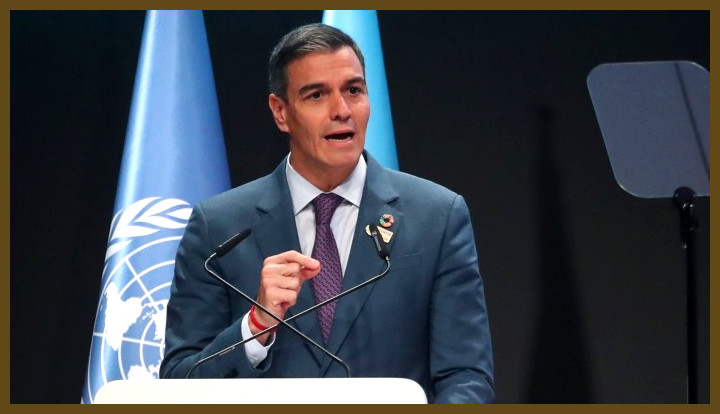
During the summit, a national leader emphasized the grave reality of climate impacts, proclaiming that “climate change kills.” Interestingly, it was Prime Minister Pedro Sánchez of Spain speaking at the plenary, following severe flooding that claimed over 220 lives, directly linked to climate change.
As COP29 progresses, the focus continues on whether developed nations will realize that providing financial support to decarbonize the global economy is in their own best interests, especially after the dire events in both Spain and the United States.
A significant academic paper circulating among negotiators advocates for re-evaluating how developed countries perceive their support to poorer nations. It argues that climate financing should not merely be seen as charity but as a strategic economic investment.
The research indicates that developing countries will require around $958 billion annually from international sources to support the transition away from fossil-fuel-based energy systems and to foster clean energy projects. If public funding can leverage three dollars in private investment for every dollar allocated, rich nations would need to provide approximately $225.9 billion each year just for the power sector alone.
Reconsidering Climate Strategies
The authors of the paper point out that while the call for financial support may seem daunting to some politicians in wealthier countries, the impacts of climate change are already affecting them and will only escalate in the future. They argue that investing now to mitigate climate change will yield long-term benefits.
For example, allocating $2.8 trillion to help reduce emissions in developing countries over the next ten years could result in an expected economic return of $7.9 trillion, offering a return of approximately 182%. This projection does not account for the additional global economic benefits.
The message is clear: developing nations need more than financial support; they require a structured approach tailored to their specific energy needs and conditions. Without adequate finance for both retiring fossil fuel capabilities and advancing renewable energy projects, any climate action plan is likely to fall short.
Last week, UK Prime Minister Sir Keir Starmer showcased a bold plan aiming to cut the nation’s greenhouse gas emissions by 81% compared to 1990 levels by 2035. However, his government’s announcement failed to articulate a position on international climate finance, emphasizing the need for developed countries to boost their financial commitments to developing nations.
In conclusion, failing to provide substantial climate finance could lead to increased damages and adaptation costs domestically for developed nations, highlighting the intertwined nature of international climate responsibility.