

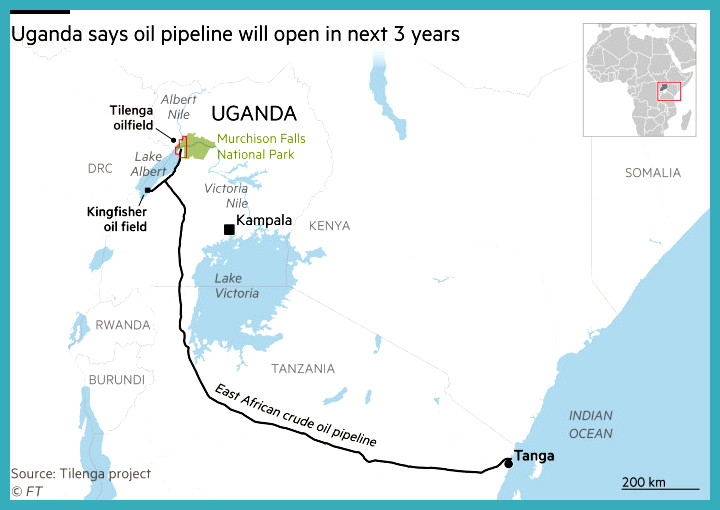
Uganda’s energy development plans have taken center stage, with officials affirming that the country’s ambitious crude oil pipeline project is still on track despite certain challenges. According to Energy Minister Ruth Nankabirwa, the East African crude oil project is set to continue operations, aiming to be fully functional in the next three years.
At a recent climate summit held in Baku, Azerbaijan, Nankabirwa highlighted the significance of the ongoing developments: “We have invested significantly in exploration and critical infrastructure. Our drilling is underway,” she stated.
By the year 2027, Uganda could begin exporting oil from its oilfields, facilitated by a $4 billion pipeline stretching 1,443 kilometers through Tanzania to the port of Tanga. This transformation is expected to revolutionize the energy landscape in East Africa, although it has faced criticism for potential environmental damage and displacement of communities.
TotalEnergies and China’s Cnooc are spearheading the project in collaboration with both Ugandan and Tanzanian national oil companies to develop the Kingfisher and Tilenga oil fields adjacent to Lake Albert. The drilling process has commenced, and construction of the pipeline is already in progress.
The pipeline is projected to allow Uganda to produce around 230,000 barrels of oil daily, exceeding the output of Opec member Gabon. Out of this, 60,000 barrels per day would be used for local refining while the remaining 170,000 barrels would be exported via a pipeline designed with electric heating to facilitate the transport of Uganda’s thick crude oil.
The drive to harness Uganda’s oil resources began 18 years ago when oil was discovered in the Albertine rift basin. President Yoweri Museveni has maintained that this natural resource could elevate Uganda into upper middle-income status.
Nankabirwa noted, “Countries like Uganda are capitalizing on their fossil fuel deposits for economic growth.” She emphasized the dilemma faced by many African nations, which must balance economic development against climate change challenges. Activists express concerns over the pipeline’s route, which is set to cross critical nature reserves around Lake Victoria while risking the displacement of both residents and wildlife.
Organizations have been vocal in protesting against the project amidst a climate of restricted political dissent. The International Federation for Human Rights reported an increase in arrests of activists opposing Uganda’s oil initiatives.
Nankabirwa refuted the claims of critics, insisting that the government is committed to responsible development. “They have spread misinformation about our project and community impact,” she argued.
She acknowledged the influence of climate change on funding efforts, citing Standard Chartered’s withdrawal from financing due to pressure from environmental activists. The structure of the project’s equity and debt has shifted, now requiring stakeholders to source financing from global institutions, including China’s Export-Import Bank.
The minister asserted that the pipeline has a projected operational lifespan of 25 years and lamented that delays due to activism mean the first oil might not flow until 2026 or 2027 instead of the initially anticipated 2025.
Experts like Dickens Kamugisha from the Africa Institute for Energy Governance warned that this project could make East Africa reliant on fossil fuels for decades. The supporters of the project argue that Africa has minimal responsibility for global CO2 emissions and should therefore be allowed to leverage its oil and gas reserves for economic progress.
Nankabirwa maintains that while tapping into fossil fuel resources, Uganda must remain mindful of its climate vulnerability.