

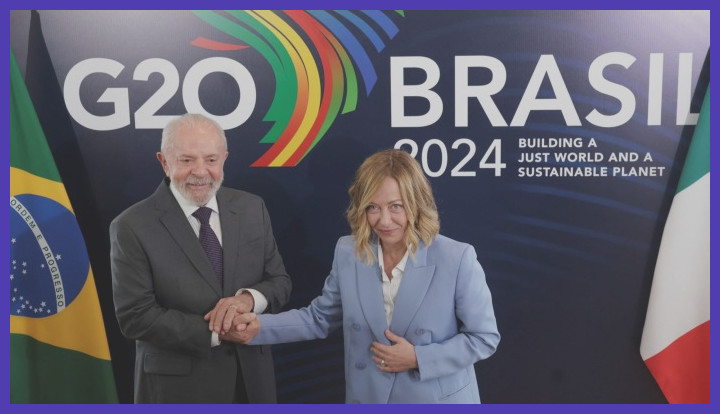
Good morning from Rio de Janeiro, where leaders from some of the world’s biggest economies are convening for the G20 summit. This year’s gathering is being heavily influenced by the new political landscape in the United States under President-elect Donald Trump.
Today’s focus will be on what this summit means for international relations, particularly as additional reporting from Europe centers on the ongoing gas conflict between Austria and Russia.
Diplomatic Challenges Ahead
As European leaders arrive in Rio for the G20, they are faced with a new and challenging diplomatic environment. With the impending shift in U.S. policy towards bilateral negotiations and away from multilateral frameworks like the G20, many are concerned about the future of international cooperation.
The G20 was established to tackle essential global issues, including economic stability, climate initiatives, and development strategies. Key European players, including France, Germany, and Italy, are all participating, with Spain having a permanent invitation.
President Trump’s approach signals a possible breakdown of traditional alliances, as his administration’s focus on direct negotiations skips over cooperative agreements. Argentina’s newly elected libertarian president, Javier Milei, already indicates his alignment with Trump and has suggested blocking the summit’s collective statements on vital matters like wealth taxation and climate policies.
This shift worries European officials, who see Milei’s actions as a potential signal for Trump-style governance spreading globally, risking long-standing multilateral agreements.
Concerns About G20 Unity
European capitals fear that the G20 might become less cohesive as nations start to tackle issues in a more individualized way, leading potentially to stronger alliances between rivals such as Russia and China.
“There’s a growing trend where countries prefer a non-aligned stance,” said Ian Lesser, a scholar at the German Marshall Fund. “This can open opportunities for countries like Russia and China to forge their own collaborative groups, further straining Western ties.”
Energy Supply Woes
Turning to Europe, Austria is currently dealing with an urgent energy crisis after Russian gas giant Gazprom cut its gas supplies. Gazprom’s move comes after a ruling from an arbitration court that favored Austria’s energy company, OMV, in a financial dispute.
Austrian Foreign Minister Alexander Schallenberg criticized Russia for exploiting energy as a political tool, stressing that such tactics highlight a concerning disregard for the rule of law within these negotiations. Despite the halt in gas deliveries, Schallenberg assured that Austria’s energy reserves remain robust and nearly full.
European gas prices reacted sharply, hitting their highest levels in nearly a year as fears of wider distribution disruptions loomed. However, Gazprom later indicated that overall gas deliveries to Europe will remain steady, suggesting that the amounts formerly directed to Austria could be redirected to other European nations.
What’s Next?
- G20 leaders are presently meeting in Rio de Janeiro.
- EU foreign ministers will hold discussions later today.
- EU agriculture and fisheries ministers will also convene.
Additional Headlines
- Banking Developments: Recent research reveals capital requirements for large European banks are significantly lower compared to their U.S. counterparts.
- Military Aid for Ukraine: The U.S. has granted Ukraine the long-anticipated approval to employ long-range missiles against targets within Russia.
- Manufacturing Struggles: European plastic manufacturers face closures due to intense competition from an influx of affordable global materials.
This summit will be crucial in shaping the future of international relations, especially with such significant challenges on the horizon.