

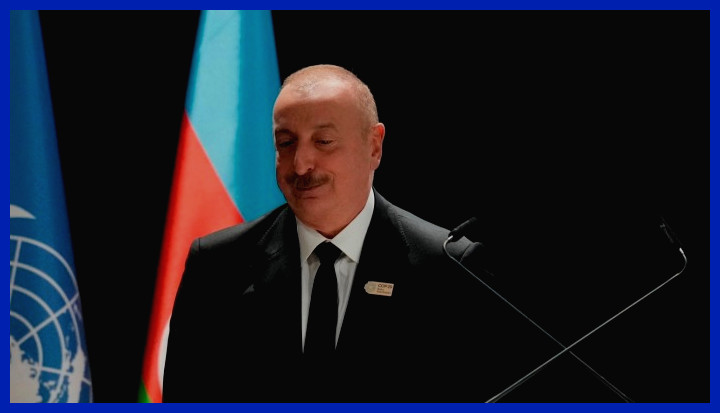
France and Argentina have pulled their top climate negotiators from the ongoing COP29 summit in Azerbaijan, exacerbating the existing tensions at the climate conference. This significant decision comes after Azerbaijan’s President Ilham Aliyev made controversial remarks, blaming French President Emmanuel Macron’s administration for violent actions against citizens during protests in New Caledonia.
During his speech, President Aliyev referred to France’s territories in the Pacific as “colonies”, also bringing up historical nuclear tests conducted in French Polynesia and Algeria. Historically, France has shown support for Armenia amidst its long-standing conflict with Azerbaijan.
France’s environment minister, Agnès Pannier-Runacher, criticized Aliyev’s statements as inappropriate for a summit of such importance. With her absence at COP29, France’s participation is significantly diminished, as President Macron had already opted not to attend the summit in Baku. Nonetheless, a French climate ambassador is participating in ministerial sessions, and arrangements are being made to keep the negotiations moving forward from Paris.
Adding to the list of notable absentees from COP29, US President Joe Biden, European Commission President Ursula von der Leyen, Indian PM Narendra Modi, and Chinese President Xi Jinping are also not present. The situation has become increasingly complicated with the return of Donald Trump to the political scene, as he has promised to withdraw from the pivotal Paris climate accord established in 2015.
COP29 is set against the backdrop of alarming projections from the EU’s Copernicus climate service, which indicated that 2024 is likely to be the hottest year recorded, with temperatures anticipated to exceed pre-industrial levels by 1.5°C.
On another front, Argentina has also recalled its climate negotiators from the conference, following directives from President Javier Milei, who has openly aligned himself with Trump. Argentina is noted for having the fourth-largest shale oil and second-largest shale gas reserves in the world.
In light of these withdrawals, the COP29 presidency has yet to comment. However, EU climate chief Wopke Hoekstra took to social media to defend France, emphasizing that conferences like this should remain a platform for negotiation, irrespective of political disputes.
While the number of attendees at COP29 is lower compared to last year’s COP28 in the UAE, the fossil fuel industry appears to have a strong presence, with numerous executives from major companies such as ExxonMobil and BP in attendance. Contrastingly, the representation from G7 nations has significantly declined.
Azerbaijan has invited a record number of guests compared to previous host nations, despite its own delegation being smaller. This year’s conference is anticipated to attract over 65,000 participants, although support staff include much of this number.
Significant global entities including China and Turkey are well-represented, while leaders from G7 countries face scrutiny regarding their commitment to ambitious climate finance goals.
As neighboring countries of Azerbaijan experience the challenges posed by climate change, they echo a united interest in addressing environmental degradation impacting the region, particularly around the Caspian Sea. This conference not only serves as a procedural gathering but also as a moment for countries to voice their stance on colonial legacies and regional cooperation in tackling climate issues.
Amid these complex dynamics, the importance of a strong global response to climate change remains critical, with many eyes now turned towards the ongoing negotiations in Baku.