

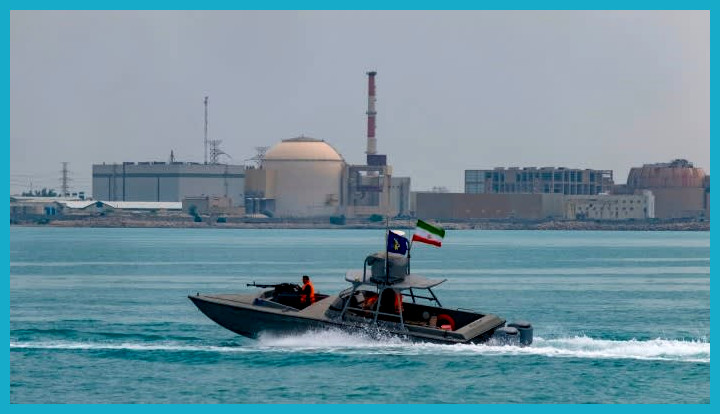
Oil prices are poised to experience their most significant weekly surge in a span of two years, driven by trader speculation surrounding the potential for assaults on vital energy infrastructure in the tumultuous arena of the Middle East, particularly involving Israel and Iran.
On Friday, Brent crude—the global oil benchmark—saw its value soaring above $78 a barrel, marking an impressive increase of over 9 percent since the previous Friday, fueled by a remarkable four-day rally. This upward momentum arises amid surging tensions that have cast a shadow over oil supply stability in a region that accounts for roughly one-third of the world’s crude production.
In a declaration echoing across the market, US President Joe Biden revealed a chilling prospect: Israel was contemplating strikes aimed at Iran’s oil facilities as a form of retaliation for a missile barrage launched at Israel earlier in the week. Herein lies the gravity of the situation—Iran, exporting 1.7 million barrels of oil daily primarily via the Kharg Island terminal, is at the heart of this escalating conflict.
The specter of disrupted Iranian oil exports, coupled with the looming threat over the strategic Strait of Hormuz, has propelled Brent futures to their largest weekly ascent since October 2022. Analysts and traders alike share a palpable sense of dread: Israeli strikes on Kharg Island could provoke retaliatory action from Iran and its regional proxies, targeting energy infrastructure across the already volatile landscape.
Iran’s Revolutionary Guards, through the voice of Brigadier General Ali Fadavi, issued a stern warning on Friday—should Israel make a “mis-step,” Tehran would retaliate by striking all of its energy assets, encompassing power stations, refineries, and gas fields. In an interview with Al Mayadeen, a Lebanese outlet known for its ties to Iran and Hezbollah, Fadavi emphasized a stark disparity—while Iran boasts a sprawling energy infrastructure, Israel’s vulnerabilities make it a prime target for a “precise and devastating strike.”
In an alarming turn of rhetoric, the Iraqi militant group Kata’ib Hizbollah, aligned with Iran, proclaimed that a looming “energy war” would unleash catastrophic losses on global oil supplies, insinuating that the sustainability of other nations’ exports would be jeopardized. Their cryptic warning was clear: “If the energy war starts, the world will lose 12 million barrels per day of oil…Either everyone enjoys [the oil] or everyone is deprived.”
Significantly, the current oil surge has been partially tempered by OPEC+ members, who maintain a spare production capacity after two years of output cuts aimed at stabilizing prices. With over 5 million barrels per day offline—largely from heavyweights like Saudi Arabia and the United Arab Emirates—there lies a potential buffer to restore market stability, should Iranian supplies dwindle or be obstructed.
The potential impact of an Iranian attempt to blockade the Strait of Hormuz, often hailed as the “world’s most important oil transit chokepoint” by the US Energy Information Administration, cannot be overstated. Approximately 20 percent of global oil supplies flow through this narrow maritime corridor daily, encompassing not just OPEC’s giants but also liquefied natural gas from Qatar.
Historically, a complete shutdown of the Strait has never occurred, but speculation abounds about the ramifications. Should such an event unfold, industry experts like Claudio Galimberti, chief economist at Rystad Energy, forewarn that oil prices could soar to an astonishing $150 a barrel—or beyond. “A closure lasting even ten days would wreak havoc; stretch it to a month, and we could be on the brink of a global economic catastrophe,” he cautioned.
Reflecting on history, during the tumultuous Iran-Iraq war in the 1980s, Tehran’s mining efforts in the Strait sparked what became infamously known as the tanker wars; however, any hostile action aimed at strangling supply would also cripple Iran’s own export capabilities. “The Strait of Hormuz holds immense significance for us; most of our oil traverses through there. Instability in this region would inevitably have repercussions for us. Presently, we’re not focused on that risk, but if circumstances deteriorate, those influencing our leaders might lean toward more radical responses,” remarked an Iranian official, contemplating the catastrophic potential of unceasing hostilities.
Further underscoring the complexity of interactions in this crisis, Iranian officials are actively engaging with their Gulf neighbors, holding discussions that include Iranian President Masoud Pezeshkian’s meeting with Qatar’s Emir Sheikh Tamim bin Hamad al-Thani and Saudi Foreign Minister Prince Faisal bin Farhan in Doha earlier this week. The storm of geopolitical tensions continues to brew, casting a significant shadow over the global energy landscape.