

Google and Xcel Energy Unite for Major Battery Project
Google and Xcel Energy recently announced a significant collaboration aiming to create the largest battery project in terms of energy capacity worldwide. This battery will serve a new Google data center in Minnesota, which will be fueled by 1.6 gigawatts of renewable energy.
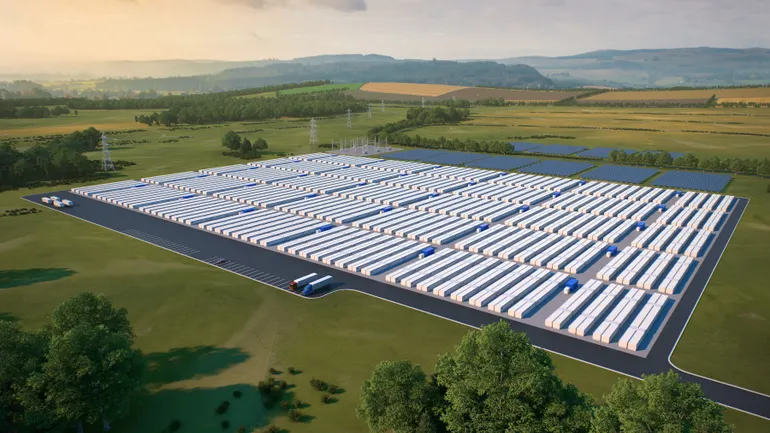
The planned battery will have a capacity of 300 megawatts with a storage capability of 30 gigawatt-hours. Developed by Form Energy, this innovative battery uses iron-air technology, allowing it to provide power for extended periods, particularly during high-demand times. Form Energy claims its system can deliver energy efficiently for up to 100 hours, making it a promising solution for energy storage.
Mateo Jaramillo, CEO of Form Energy, expressed optimism about meeting production goals, anticipating the shipment of the first battery modules by late 2028 as their West Virginia factory scales up operations.
In more detail, the agreement will feature the integration of 1,400 megawatts of wind energy and 200 megawatts of solar power alongside Form’s 300-megawatt battery into Xcel’s Upper Midwest grid. Utility representative Kevin Coss noted that the exact deployment locations for the battery modules have not yet been finalized, suggesting they might be split across several smaller installations rather than a single large site.
Xcel Energy views long-duration energy storage as a vital method for managing energy supply fluctuations, especially during seasonally adverse weather when wind and solar energy production can fall short.
Google is set to cover all construction expenses through a new rate structure similar to the Clean Transition Tariff it established with NV Energy, aimed at enhancing its energy sourcing strategy amid tightening grid limitations and rising competition. Along with this battery project, Google will also contribute $50 million to support Xcel’s Capacity*Connect initiative, which focuses on strategically placing batteries to ease grid congestion.
Minnesota regulators are currently reviewing the Capacity*Connect proposal, which aims to install between 50 to 200 megawatts of batteries by 2028 in small increments. Some stakeholders have raised concerns regarding the projected costs compared to similar programs in Colorado, indicating a more complex implementation process in Minnesota.
As of now, Form Energy does not plan to be part of the Capacity*Connect program. Meanwhile, their production facility in West Virginia continues to thrive, with over 100,000 electrodes produced, paving the way for future scalable operations.