

Cuba is open to discussions with the United States without any preconditions, as the island faces a severe energy crisis. President Miguel Díaz-Canel made this announcement during a televised news conference while addressing concerns related to U.S. actions and policies that threaten Cuba’s energy supply.
Díaz-Canel asserted the country’s readiness to engage in dialogues on any topic, emphasizing the need for mutual respect regarding sovereignty and self-determination. However, he firmly stated that any interference in Cuba’s internal matters would be unacceptable.
His comments followed a statement from a Cuban deputy foreign minister, who disclosed that initial communications had been initiated between Cuba and the U.S. White House press secretary Karoline Leavitt acknowledged Trump’s willingness to pursue diplomatic solutions with Cuba, despite portraying the Cuban government as near collapse.
As power gradually returned to areas affected by a major outage, Díaz-Canel highlighted that measures would be necessary to cope with ongoing fuel shortages. He indicated that rationing might be implemented to ensure essential services continue.
Cuba has not received oil shipments since the start of January, with U.S. policy impacting the availability of fuel. Current estimates suggest the island has enough oil for only 15 to 20 days. Nonetheless, reports indicated the possibility of a tanker bringing vital fuel from Venezuela.
Díaz-Canel criticized U.S. actions as “aggressive and criminal,” asserting that they substantially impact healthcare, education, and tourism, crucial sectors for Cuba’s economy. He promised to enhance domestic oil production, refine resources, and increase the use of renewable energy.
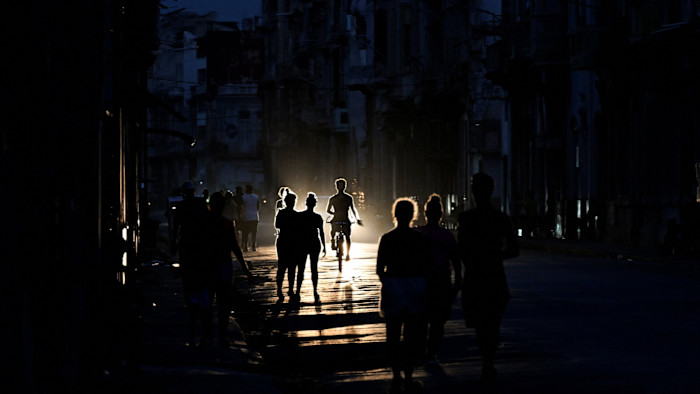
Recent blackouts, particularly in Santiago de Cuba, have left large populations without power, with experts warning that the situation may worsen due to the island’s dependence on energy imports. The Cuban Electricity Union cited equipment faults as the cause of recent outages.
Efforts are underway, including a potential humanitarian aid proposal from Mexico’s government. Meanwhile, China has expressed support for Cuba, although specifics regarding energy assistance remain unclear.
The U.S. embassy recently warned its citizens about Cuba’s deteriorating power grid, underlining the challenges posed by energy shortages impacting essential services.