

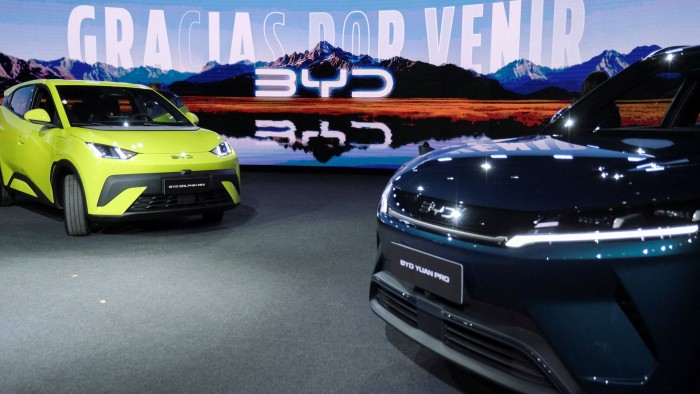
China is rapidly transforming into the world’s leading clean energy superpower, and its significance is just starting to be recognized. While discussions about how Europe and the US should respond are common, the effect of this shift on developing countries has been overlooked. The availability of affordable Chinese clean technology could enable nations worldwide to decrease their dependence on fossil fuels and reduce emissions in transportation and heavy industry.
One of the most prominent sectors in this change is electric vehicles (EVs). Ilaria Mazzocco, an expert on Chinese industrial policy and EVs, shared insights in a recent conversation about the evolving landscape of electric vehicles in emerging markets.
In her latest report with Ryan Featherston at the Center for Strategic and International Studies, they explored how the rise in EVs is impacting these markets.
Mazzocco noted that China’s lead in the EV sector has caught many in the West off guard. Unlike in other tech areas where competition is fierce, China has significantly advanced clean energy technologies. The automotive sector, in particular, holds emotional weight for many, making advancements in this field even more noticeable.
When discussing the global push toward de-globalization, Mazzocco emphasized that while the US is attempting to reduce its reliance on China in the automotive supply chain, many other countries are increasingly dependent on Chinese resources.
Many nations are eager to adopt EV technology, and most emerging markets are developing plans to transition away from traditional vehicles. Even countries like South Africa, which have lagged behind, recognize the significance of EVs. Unlike the partisan debates in the US surrounding clean energy, different nations are focusing on the potential job opportunities that this transition could create.
Some countries are leveraging Chinese investments to progress in the EV sector, but it’s still uncertain how genuinely supportive China will be in helping them achieve their goals. The ability for local companies to produce EV components efficiently will take time, and the extent of localization will become clearer in the coming years.
There’s also a possibility that developing nations could adopt cleaner transport systems more swiftly than some developed countries. While regions like Africa may take longer to transition, there’s a chance for “leapfrogging,” allowing countries to bypass traditional car ownership and move straight to electric options.
The long-term implications for the US are considerable. Although some argue that the US auto industry is insulated from changes in developing markets, neglecting advancements in EV technology could hamper the competitiveness of American automakers in the coming decades.
In summary, China’s rise as a leader in clean technology is a historical trend that warrants careful examination. Understanding this evolution requires acknowledging the new realities of global energy markets and how they influence economies worldwide.