

Welcome to Energy Source from New York
In recent news, ExxonMobil’s CEO, Darren Woods, has confirmed that the company does not plan to return to Russia. This comes amid discussions with Russian officials about recovering approximately $4.6 billion lost after the government seized Exxon’s stake in the Sakhalin-1 oil project.
In the U.S., the Federal Reserve has cut interest rates for the first time this year, responding to pressures from the White House. However, Chair Jay Powell noted that the labor market is showing signs of weakness, prompting a focus on keeping Americans employed rather than just controlling inflation. In fact, consumer price inflation has increased to 2.9 percent in August from 2.7 percent in July.
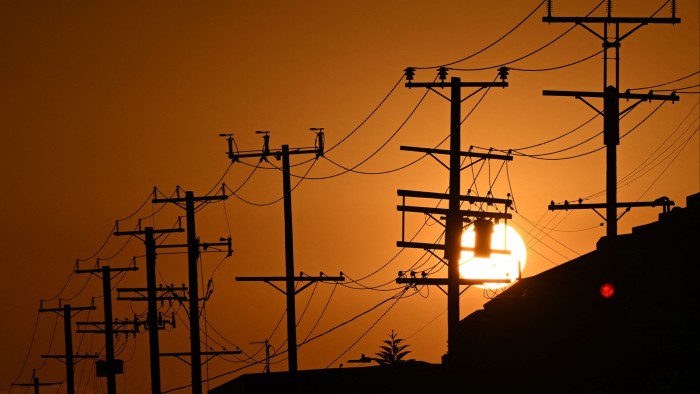
American households are feeling the strain as energy bills rise. Recent reports indicate that electricity costs have reached record highs, driven by investments in aging power infrastructure and increased demand from AI data centers. Experts believe that higher electricity prices may soon become a key political issue, potentially affecting President Trump’s goal of halving energy prices within a year.
Nonetheless, rising energy costs could present opportunities for clean energy developers, particularly those in solar energy who are adjusting to the earlier phasing out of essential tax credits.
Will Higher Power Prices Favor Solar Energy?
U.S. solar developers are racing to complete projects before federal tax credits expire, betting that rising power prices will help offset the absence of government support. Solar emerged as the top energy source in the U.S. last year, mainly due to its affordability and quick deployment.
Despite its advantages, the phase-out of tax credits might slow the growth of solar installations, with predictions showing a possible 5 percent annual contraction from 2025 to 2030. The “One Big, Beautiful Bill Act” mandates that solar projects must be operational by 2027 or start construction by mid-2026 to qualify for the investment tax credit.
As solar project costs rise, the expected increase in electricity demand, along with fewer new clean energy additions, is likely to push power prices higher. Interestingly, some smaller solar developers believe this rise in electricity prices may actually boost their business.
Jorge Vargas, CEO of Aspen Power, noted that higher power rates could lead to lucrative power purchasing agreements, making the need for reliable energy sources more appealing.
Reports indicate that retail electricity prices in the U.S. have climbed by 13 percent over the past three years—outpacing inflation—and are likely to continue rising due to factors such as AI data center growth and increased electrification of the economy.
Vargas expects to gain more revenue as retail electricity costs increase. Similarly, customers may still see value in solar projects that can deliver power quickly, even if prices rise.
Higher energy prices could also enhance the attractiveness of community solar, allowing those without personal solar installations to benefit from shared facilities. Kelly Friend from Nexamp highlighted that as energy costs go up, people will be more inclined to pursue options for reducing their electricity bills.
Solar remains the leading energy source in the U.S., accounting for 56 percent of new power capacity in the first half of the year, while natural gas contributed just 26 percent. This affirms solar’s status as both a fast and cost-effective energy source.
Data Insights
A recent analysis reveals that global investment in oil and gas is declining due to low oil prices and economic uncertainties, along with advancements in technology that enhance efficiency. Wood Mackenzie reports that the upstream sector is moderating spending amidst these challenges.
Experts caution that if oil demand does not peak as expected in the upcoming years, the industry may struggle to keep up with demand.
In Other News
- Abu Dhabi’s state oil company, Adnoc, has backed out of an $18.7 billion deal to take over Santos, one of Australia’s leading energy firms.
- Former Vice President Al Gore criticized the Trump administration for pressuring countries to abandon climate initiatives.
- Qatar’s sovereign wealth fund is investing $500 million in Canada’s Ivanhoe Mines.
The Energy Source team is dedicated to bringing you the latest developments and insights into the energy sector.