

Sweden is making a significant shift in its energy policy by planning to build small nuclear reactors, marking a departure from its previous decision to abandon nuclear technology four decades ago.
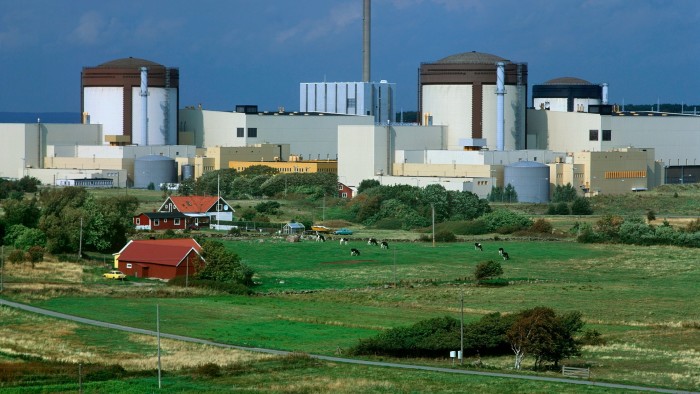
The state-owned energy company Vattenfall announced that it will select between small modular reactors (SMRs) from American firm GE Vernova or the British company Rolls-Royce. These reactors will be installed at Vattenfall’s existing Ringhals nuclear plant, located in southern Sweden.
Prime Minister Ulf Kristersson expressed optimism about this project, stating, “Now it’s happening — with new nuclear power, Sweden will get more stable, competitive, and climate-friendly energy generation.” Anna Borg, Vattenfall’s CEO, added that this initiative signifies the first step toward new nuclear power construction in Sweden in over 40 years.
As part of a recent trade agreement with the U.S., the European Union has committed to invest more in American energy technology, including nuclear power. However, individual investment decisions remain under the control of companies and governments.
Sweden began constructing 12 nuclear reactors during the 1970s and 1980s but halted further development after the Three Mile Island incident in the U.S. In recent years, some of its remaining six reactors have had their operational lives extended as the current government seeks to revive nuclear energy.
In the broader context of the EU, Sweden stands alongside France as a strong supporter of nuclear energy, participating in a coalition with like-minded nations. The country’s energy landscape currently faces challenges; it relies heavily on hydroelectric power concentrated in the north while the industrially rich south grapples with rising energy costs as nuclear energy’s contribution declines.
Vattenfall plans to construct either five American modular reactors or three British ones adjacent to Ringhals 1 and 2. The new reactors, expected to generate a total of 1,500 megawatts, would be three times more powerful than Sweden’s first nuclear facility at Oskarshamn. The utility also aims to explore an additional 1,000 megawatts for the Ringhals site.
Nuclear power is experiencing a resurgence across Europe after years of decline. For instance, Denmark, once a leader in offshore wind energy, signaled in May that it might lift its 40-year ban on nuclear power to enhance its energy mix. Likewise, Germany has softened its longstanding opposition to categorizing nuclear power as a renewable energy source, although it remains cautious about restarting its plants.
With a goal to achieve zero carbon emissions by 2050, EU officials recognize the essential role of nuclear energy in the bloc’s future energy strategy. The European Commission has estimated that approximately €241 billion will be necessary to support nuclear initiatives across member states over the next 25 years.
Small modular reactors, produced in factories and offering potentially quicker construction timelines, have garnered global interest, though many are still in the design phase or awaiting regulatory clearance. This contrasts with traditional power plants, which typically take much longer to complete; Finland recently opened its first new nuclear plant in Western Europe in 2023, which was delayed by 14 years and exceeded its budget nearly fourfold.