

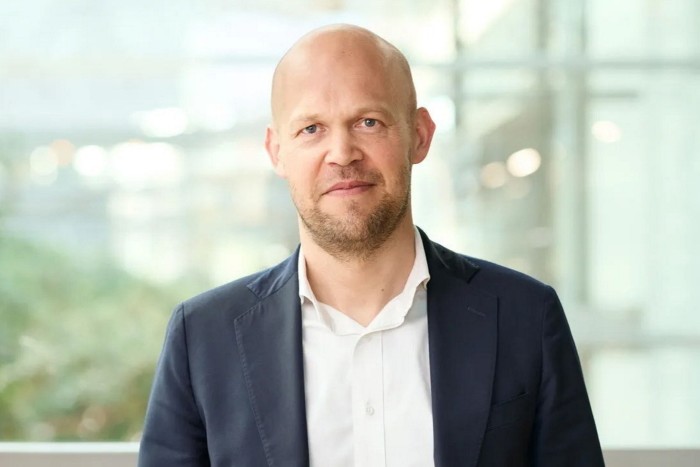
Rasmus Errboe, the new CEO of Ørsted, the world’s largest offshore wind developer, faces significant challenges as he works to reshape the company after a tough few years. Appointed in January, Errboe quickly reduced investment plans by 25% to stabilize finances without seeking shareholder funds or risking the company’s credit rating.
Ørsted has struggled recently; high interest rates and increased interest in fossil fuels have impacted its aggressive expansion. A critical blow came when a U.S. presidential order halted a major wind project by competitor Equinor, leading investors to become wary and jeopardizing Ørsted’s plans to sell a stake in its own nearby Sunrise Wind project.
Errboe noted that investors raised their return expectations significantly, causing a funding gap. In response, Ørsted announced a $9.4 billion rights issue to finance its U.S. projects and act as a buffer for its other initiatives.
After announcing this rights issue, Ørsted experienced a sharp decline in its stock, dropping over 30% in value and losing more than $4 billion in market capitalization. The surge in short-selling also indicated that investors are betting on further declines.
This situation stands in stark contrast to 2021 when Ørsted’s valuation reached $90 billion, outpacing even some major oil companies. Errboe and his team are working hard to secure support for the rights issue ahead of an important shareholder vote in early September.
The Danish government, which owns a majority of Ørsted, has backed the company, demonstrating its importance for the future of offshore wind energy in Europe. Notably, Equinor also plans to engage with Ørsted regarding future collaborations.
Despite the recent challenges, Ørsted maintains a focus on its extensive offshore projects, which are expected to generate significant future revenue. With plans to complete 8.1 gigawatts of power generation from ongoing projects by the end of 2027, the company aims to stabilize its financial situation through a mix of issuing shares, cash flow, and asset sales.
While external conditions remain tough, including higher interest rates and ongoing delays, Errboe believes the potential for offshore wind remains strong. The company also continues to shift focus toward offshore wind, moving away from onshore projects and hydrogen initiatives amidst rising costs and supply chain issues.
In the face of these challenges, Errboe remains optimistic about securing necessary funding and navigating the turbulent waters of the renewable energy market.