

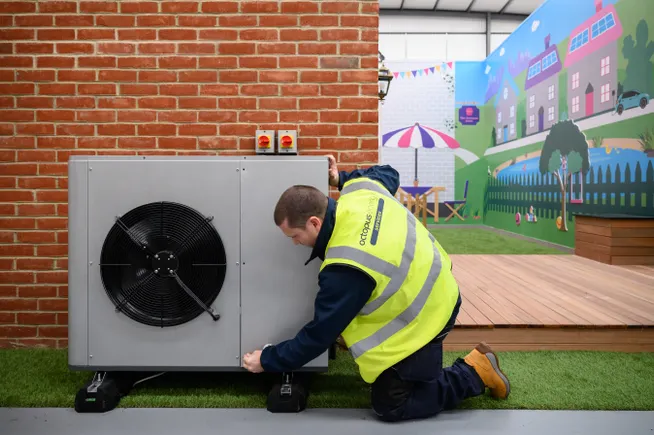
Heat pump installations have been outpacing gas furnace sales since 2021, a trend expected to continue as manufacturers improve their energy-efficient products. The Rocky Mountain Institute, a nonprofit in the clean energy sector, has highlighted this shift.
Despite some uncertainty surrounding the heating, ventilation, and air conditioning (HVAC) market, the adoption of heat pumps is likely to keep rising, experts suggest. This growth comes even as the recent One Big Beautiful Bill Act phases out some federal incentives for energy-efficient upgrades.
Signed into law in July, this act reduces solar and wind incentives and ends key tax credits for residential clean energy after this year. It also introduces a gradual decrease in investment tax credits starting in 2034.
However, the law is more favorable towards geothermal heat pump projects, which can still qualify for a full investment tax credit if construction begins by 2033. This segment benefits from a 6% base tax credit, unlike some other energy projects, which faced cuts.
David Rames, a senior product manager at heat pump manufacturer Midea, believes that the biggest misconception is that the law harms heat pumps. He argues it actually encourages a market shift towards more affordable and easier-to-install options.
For commercial and multi-family buildings, state and utility programs remain robust. States like New York, Massachusetts, and California are still offering significant rebates that can help offset installation costs.
For instance, New York is providing up to $750,000 for projects using ground-source heat pumps and other low-emission technologies as part of a broader effort to decarbonize facilities.
California, too, has plans to dramatically increase heat pump adoption, aiming for six million installations by 2030, to fulfill its climate goals.
While heat pumps have had past challenges, such as lower efficiency in colder climates, advancements have been made. Eight manufacturers are now developing systems that perform well in low temperatures, with several expected to reach the market by 2025.
Today’s modern heat pumps offer many advantages, including energy efficiency and adaptable designs, positioning them as viable alternatives to traditional gas systems.
Moving forward, the success of heat pumps will depend on ease of installation, available incentives, and longevity, factors where modern models currently excel compared to older gas-based systems.
However, the new law could present challenges for some foreign manufacturers by imposing restrictions that may affect their operations in the U.S.
Overall, the future of heat pump adoption looks promising, despite some hurdles, as both market dynamics and consumer preferences shift toward more sustainable solutions.