

Oil Demand Predictions Diverge
Greetings from London and Calgary!
Recently, there has been much debate regarding the growth of oil demand this year, with various forecasts showing significant discrepancies. Last Friday, the International Energy Agency (IEA) announced that it anticipates global oil consumption to rise by only 700,000 barrels per day (b/d), the slowest growth rate since 2009, excluding the pandemic. This is down from an earlier estimate of 720,000 b/d. Meanwhile, the U.S. Energy Information Administration revealed a different outlook, projecting an increase of 800,000 b/d for 2025.
Contrarily, OPEC+, the group responsible for about 40% of the world’s oil production, predicts that demand will increase by 1.3 million b/d this year. This sentiment was reiterated by the CEO of Saudi Aramco, Amin Nasser, during an OPEC seminar in Vienna.
However, OPEC+ predictions have often missed the mark in recent times. Last December, they estimated an increase of 2.2 million b/d for the following year, later revising this number down several times to about 1.6 million b/d. Similarly, the IEA had projected a 1.2 million b/d growth for 2024, later lowering this estimate to approximately 1 million b/d mid-year.
The disparity in global oil demand forecasts suggests that there are underlying political influences at play. OPEC+ leaders have often accused the IEA of bias, while the group’s own significant interests suggest they may be motivated by economic factors.
Currently, OPEC+ is in the process of reversing 2.2 million b/d of previous production cuts, asserting that the market can manage the extra supply. If the market proves unable to handle this, as many traders expect, oil prices might suffer in the latter half of the year, with predictions suggesting that Brent crude could dip below $60 per barrel by the fourth quarter.
The scenario surrounding oil demand and production has never been more captivating. Let’s observe how things unfold!
Canada’s Oil Industry Under Scrutiny
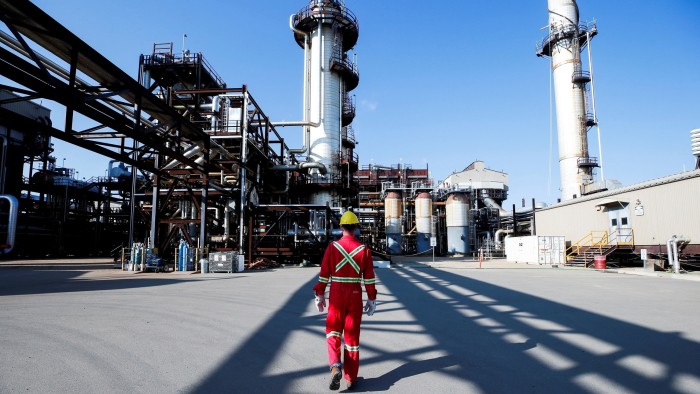
Shifting gears to Canada, Prime Minister Mark Carney’s attempt to redefine the relationship between the government and Alberta’s oil sector is encountering some challenges, particularly over climate policies and the costs associated with transitioning to cleaner oil.
Carney, who took office aiming to position Canada as an energy powerhouse, has placed a strong emphasis on maintaining oil production as long as emissions are controlled. Jeff Lawson, an executive vice-president at Cenovus Energy, expressed cautious optimism about the government’s renewed commitment to the industry, but acknowledged many hurdles lie ahead.
“There must be a fair sharing of costs between the government and the industry,” he stated. “We aim to decarbonize our oil, but we need to attract investors. Otherwise, our financial backing will dwindle.”
Carney is working to re-establish ties with the fossil fuel sector, particularly Alberta’s oil sands, which faced heavy criticism under the previous Prime Minister, Justin Trudeau. The industry claims that a decade of regulations and taxes from the Trudeau era has hindered both its growth and Canada’s economic potential.
In June, Carney discussed a “grand bargain” with industry leaders, indicating tentative support for new pipelines and a substantial investment in carbon capture technologies for Alberta’s oil sands aimed at producing cleaner oil.
While Canada boasts the world’s third-largest proven oil reserves, its extraction methods are some of the most carbon-intensive globally. A coalition of six major oil sands companies has proposed a significant carbon capture project valued between C$16 billion and C$25 billion to mitigate emissions while sustaining production levels.
Canada’s energy minister, Tim Hodgson, has voiced support for increasing oil output through carbon capture, although he has not detailed how the project will be financed, particularly the ongoing costs associated with making oil production greener.
Kevin Birn, an analyst at S&P Global, warned that without considerable public funding for carbon capture initiatives, Canada risks losing its opportunity for a future oil boom.
Several oil companies have already asked the government to create favorable conditions for energy projects, expressing that American oil capital is increasingly appealing as regulations tighten in Canada.
Carney is tasked with navigating the complexities of boosting oil production while ensuring environmental standards are upheld. The future of oil production in Canada remains uncertain as stakeholders await further developments.
Power Points: Quick Updates
A Saudi Arabian consortium is set to invest $8.3 billion to establish 15 gigawatts of solar and wind energy farms, driving the nation’s renewable energy agenda forward.
Rio Tinto, not traditionally viewed as an energy company, has appointed Simon Trott as its new CEO, signaling a conservative approach with a seasoned veteran at the helm.
Britain’s energy regulator is scrutinizing National Grid amid concerns about its effectiveness in maintaining vital electricity networks.
Thank you for joining us today!