

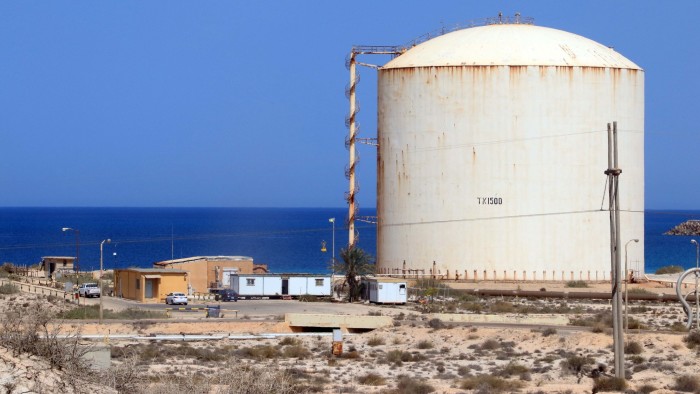
BP and Shell are stepping back into Libya, marking a new chapter in the country’s oil sector after years of turmoil. Both oil giants have signed agreements to explore new opportunities in this oil-rich nation, which is still recovering from a decade-long civil conflict.
Libya boasts significant oil and gas reserves and is one of Africa’s top producers. However, it has faced a decline in investment as international firms retreated following the political upheaval that occurred after the fall of Muammar Gaddafi in 2011.
Currently, Libya’s political landscape is split, with a UN-backed government in the west and a rival regime in the east, led by renegade general Khalifa Haftar. Despite this division, major oil companies like Eni, OMV, and Repsol have begun returning to Libya, resuming exploration activities last year.
Recently, BP announced it has signed a memorandum of understanding (MoU) with Libya’s National Oil Corporation (NOC) to assess plans for revitalizing the Sarir and Messla oilfields located in the Sirte basin. Additionally, BP plans to reopen its office in Tripoli by the end of this year.
Shell has also confirmed a similar agreement with the NOC, focusing on potential oil and gas production, although their plans are still in the early phases.
The NOC has set an ambitious target to increase Libya’s oil production from the current 1.3 million barrels per day to 2 million barrels, surpassing the previous peak of 1.75 million achieved in 2006. They are currently conducting the first tender for new exploration rights since 2011, attracting interest from several international companies.
BP has a long history in Libya, helping to discover some of the nation’s initial oilfields in the 1950s. However, following the nationalization of its assets in 1971, the company returned in 2007 with a major exploration agreement, only to suspend operations during the civil conflict in 2011.
In 2022, BP divested half of its stake to Eni, which then took over operations. This year, the two companies have officially resumed exploration after lifting the previous suspension.
The new MoUs will evaluate opportunities to rejuvenate the Sarir and Messla oilfields, identified in the 1960s and 1970s. BP views this agreement as a significant opportunity for expanding its portfolio in Libya.
In parallel, BP is engaging in a similar initiative in Iraq to develop mature oilfields in Kirkuk, responding to investor pressure to improve performance amid challenges in transitioning to greener energy.
NOC has emphasized that Shell will examine the al-Atshan field along with other areas under its control, stating that these agreements are intended to boost productivity in Libya’s oil sector and support long-term economic stability in the country.