

Hello and welcome to this week’s Energy Source update from London. A significant topic for British politicians this week is energy costs, which are set to increase by over 6%. This rise means typical household gas and electricity bills will now reach approximately £1,849 annually due to increased wholesale gas prices.
The charity National Energy Action has stated that this amount is unaffordable for low-income families, urging the government for additional support. Miatta Fahnbulleh, the government’s minister for energy consumers, emphasized the need to reduce bills through a shift away from reliance on volatile fossil fuel markets and moving towards renewable energy sources like wind and solar.
In related news, Saudi Arabia has announced that it will begin to unwind production cuts, which may lead to a sustained decrease in oil prices. Traders predict that crude oil prices are likely to stay around $75 for the remainder of the year.
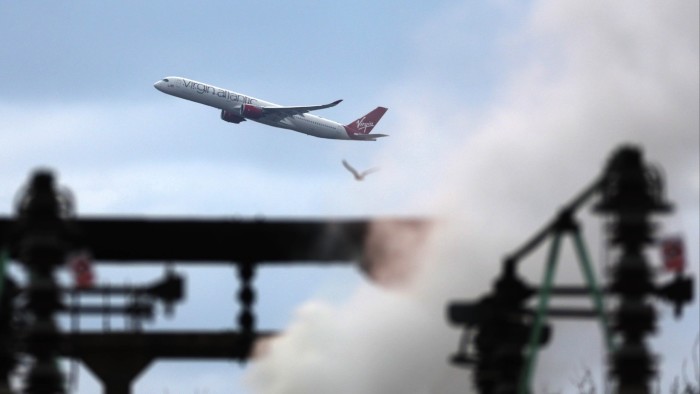
One of the main stories today focuses on the fire at an electricity substation that forced Heathrow Airport to close last month, raising serious concerns about the resilience of the UK’s energy infrastructure.
Heathrow Power Outage: ‘A Great British Mistake’
The fire that devastated a National Grid substation in west London on March 21 was extinguished after a week, but the havoc it wreaked, including an 18-hour shutdown of Europe’s busiest airport, continues to raise questions. The incident displaced around 200,000 passengers globally.
Tomorrow, British MPs will question Heathrow’s CEO Thomas Woldbye and Alice Delahunty, president of National Grid’s UK transmission division, in an effort to uncover what went wrong. The transport select committee intends to probe what measures could have been implemented to prevent such chaos.
The fire’s intensity took out two transformers at the substation, including a backup unit, which completely incapacitated the site. However, National Grid reported that two alternative substations were operational, raising questions about why Heathrow could not restore power more quickly.
This incident has sparked widespread worries about the current state of Britain’s infrastructure. Economist Dieter Helm pointed out the increasing unreliability of the electricity system, reliant on renewable sources that only function under certain weather conditions, alongside a growing demand for digital services.
The concern over power outages at airports has also gained attention in the US, where a recent survey revealed over 300 incidents between 2015 and 2022. One airport successfully implemented a system to switch power automatically to a backup substation in case of an outage, suggesting effective measures can be taken to bolster resilience.
The Heathrow incident has drawn sharp criticism from airline executives. Luis Gallego, CEO of International Airlines Group, remarked on the lack of contingency plans for such a situation. Ryanair’s chief, Michael O’Leary, did not hold back, referring to it as a “great British mess-up.”
Woldbye’s comment about airlines potentially facing higher costs to fund a more reliable power infrastructure may only intensify scrutiny of his management choices during the crisis. Reports revealed that he retired for the night while the fire raged, leaving the decision to close the airport to his chief operating officer.
As National Grid faces questions regarding its response to the fire, the upcoming committee hearing will also include testimonies from various stakeholders in the aviation sector, all eager to see how such incidents can be avoided in the future.
Passengers and airline executives alike are keen for answers, underscoring the need for a reevaluation of emergency procedures at major transport hubs.
This unfortunate event serves as a wake-up call, not just for Heathrow, but for airports across Europe as they reassess their readiness to handle similar crises.