

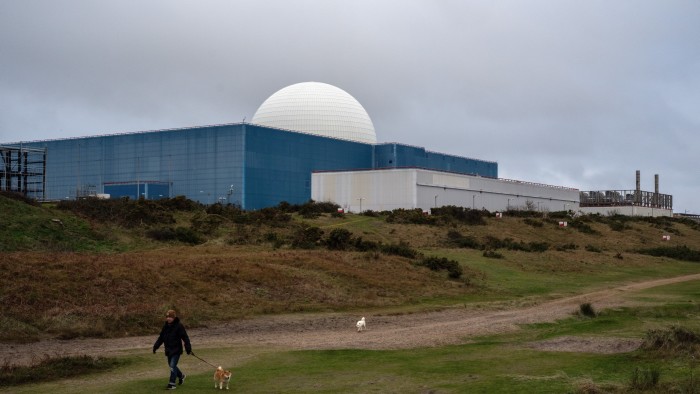
France’s state auditor, the Cour des comptes, has advised the French nuclear company EDF to hold off on making a final investment decision regarding the Sizewell C reactor project in the UK. The auditor emphasized that EDF should first work on reducing its financial involvement in another British project, Hinkley Point C.
On Tuesday, the auditors made these comments shortly after a report indicated that the construction costs for Sizewell C in Suffolk are likely to double to around £40 billion, a significant increase from estimates made in 2020. This surge in cost is primarily due to rising construction expenses and challenges faced at the Hinkley site in Somerset.
The delay in making a final investment decision could further hinder the Sizewell C project, potentially leading to even higher costs. Both the UK government and EDF, the initial investors in Sizewell C, are actively seeking additional funds from new investors, with the final decision now postponed until at least spring of the upcoming year.
The Cour des comptes described the rise in projected costs as “logical,” considering the recent overruns in other similar projects. They also recommended that any future financial decisions related to the EPR2 program, which underpins Hinkley Point C and other upcoming reactors, be carefully planned and dependent on secure financing and detailed evaluations.
This cautious approach may also influence plans for six additional EPR2 reactors announced by French President Emmanuel Macron in 2022, which are expected to cost around €80 billion. Furthermore, the auditors criticized the long-drawn Flamanville project in northern France, which recently began generating electricity but is now years behind schedule.
Cour des comptes President Pierre Moscovici noted concerns over the profitability of the Flamanville project, indicating that EDF might never recuperate its investment. With France aiming to construct six new reactors in the coming years to cater to its electricity needs, experts see this as an ambitious and potentially unfeasible goal.
In the UK, uncertainties surrounding the Sizewell project compound worries about the government’s plan for revitalizing nuclear power, which is aimed at ensuring a reliable energy supply as the country increasingly shifts towards renewable energy sources. The timeline for Hinkley Point C’s completion has also faced significant revisions, moving from an initial estimate of 2017 to a current forecast of 2029, alongside rising projected costs nearing £46 billion. EDF has indicated that its involvement in the Sizewell C project will be less substantial, with a stake of under 20%.