

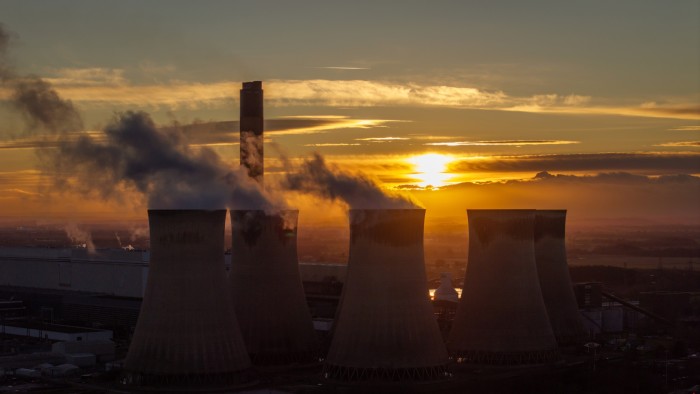
The UK government has introduced new subsidies for Drax, the nation’s largest power station, amid ongoing discussions about the sustainability of the wood pellets used as fuel. On Monday, Drax announced it has reached a contract with the government that guarantees a minimum electricity price of £113 per megawatt hour for the period from 2027 to 2031.
This new arrangement will allow Drax, which provides about 4% of the UK’s electricity, to continue operating its biomass power station in Yorkshire once the current subsidies come to an end.
In a recent statement, the government indicated that it has cut Drax’s subsidy in half and suggested that the power station will have a “much more limited role” in the electricity generation mix. Presently, Drax operates approximately two-thirds of the time, but moving forward, it will only be supported to operate at a maximum load factor of 27%, meaning it will be running less frequently.
Drax’s previous subsidies assured a strike price of £132 per megawatt hour, as noted in the company’s latest annual report. Following the announcement, Drax’s shares saw an uptick of 5% in early trading on Monday.
As Drax faces scrutiny regarding the environmental sustainability of the wood pellets it uses, the regulator Ofgem recently identified issues in its supply chain data. In response, Drax’s chief executive Will Gardiner described the new subsidies as an “investment in UK energy security” and pointed out that they are less expensive compared to constructing new fossil fuel power stations to support renewable energy sources like wind and solar.
Gardiner explained that the new deal will allow Drax to boost electricity generation when supply is insufficient, helping to limit the use of gas and the need to import power from Europe. Additionally, he noted that when there is excess electricity on the grid, Drax can reduce its output to help maintain balance.
Originally the UK’s largest coal-fired power plant, Drax now burns millions of tonnes of wood pellets as part of its transformation from fossil fuels to biomass energy. This subsidy extension gives Drax the time to implement carbon capture and storage technology, a process expected to take until 2030.
The government noted that shutting down large biomass facilities would pose risks to the UK’s energy security in the short term, highlighting the importance of keeping such operations running. A significant portion, about 11%, of the UK’s energy comes from biomass, which depends on assurances that wood is sourced from sustainably managed forests with proper replanting practices. The National Audit Office has raised concerns about the credibility of the UK’s monitoring system.
In August of last year, Ofgem concluded a 16-month investigation into Drax, stating the company lacked sufficient data regarding the sustainability of the wood it imported in 2021-22 and mandated a comprehensive audit of its supply chain for the upcoming year. Drax has agreed to contribute £25 million to Ofgem as part of the settlement. However, it was noted that the issues were mostly technical and there was no firm evidence to suggest that Drax’s biomass was unsustainable or that the company was inappropriately awarded the £548 million in clean energy subsidies it received in 2023.