

Last year marked a significant milestone in the global energy transition, with investments surpassing $2 trillion. However, a detailed analysis reveals that while traditional sectors like solar and wind energy are thriving, newer technologies are struggling.
One area facing challenges is industrial decarbonization technology. This part of the energy transition is essential but saw a notable drop in investment last year. We’ll take a closer look at LanzaTech, a company that exemplifies some key issues in this field and potential paths forward.
LanzaTech, based in the US, has created a method to convert waste gas into ethanol, leveraging a unique enzyme sourced from rabbits. This technology has attracted interest from airlines, especially as new green regulations in Europe mandate that an increasing portion of fuel be non-fossil based.
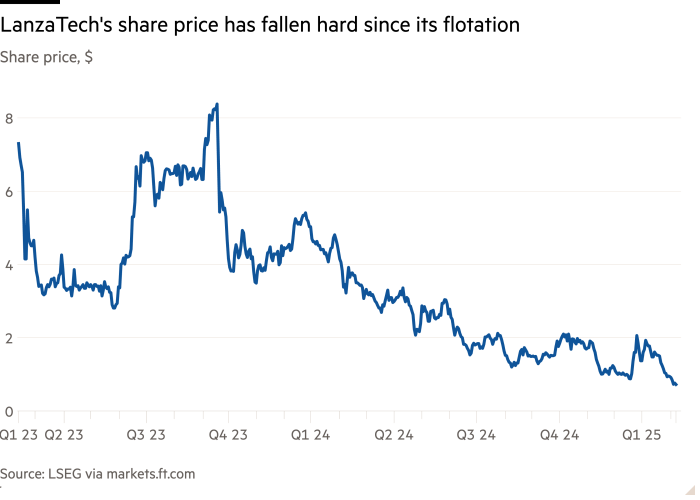
Two years ago, LanzaTech was set to go public with a valuation of $2.2 billion. However, its market cap has now plummeted by 94% to just $142 million. What led to this decline, and what can it teach us about the clean tech landscape?
The rise and fall of special purpose acquisition companies, or SPACs, played a role in this situation. SPACs surged in popularity in 2020 and 2021, allowing many companies, especially in clean tech, to go public at inflated valuations. LanzaTech was among the last to benefit from this trend, raising $185 million in capital from big players like BASF and Occidental Petroleum. Initial enthusiasm was boosted by the Biden administration’s Inflation Reduction Act, promising significant financial support for clean energy.
But as government funds were slow to materialize, investor enthusiasm waned, compounded by persistent high-interest rates that dampened the growth outlook for high-risk startups. From election day alone, LanzaTech’s stock saw a 62% drop as political uncertainties escalated.
Although investment in the energy transition reached an all-time high of $2 trillion globally, most of that funding has flowed into established sectors like wind and solar power, not into emerging technologies like LanzaTech’s. Jennifer Holmgren, CEO of LanzaTech, pointed out that despite the growth, the market has become risk-averse toward newer innovations.
Recent data reveals that investments in “mature” sectors, like electrified transport and renewable energy, rose by 14% last year. In contrast, investment in “emerging sectors,” such as alternative fuels and industrial decarbonization, fell by nearly 25%.
Corporate investment in green technologies, particularly within oil and gas companies, has also slowed. Holmgren noted that many oil firms that were previously funding alternative fuels are now stepping back, posing a significant challenge for projects like hers.
Facing a net loss of $110 million in nine months last year, LanzaTech has made moves to stabilize its finances. Recently, they spun off their core synthetic biology operations into a new joint venture, LanzaX, with plans to save $8 million annually.
Looking ahead, prospects for LanzaTech might improve with the rise of carbon pricing in industries. As the EU reduces the supply of carbon permits, it will likely drive up prices and incentivize manufacturers to invest in carbon capture technologies. LanzaTech’s solution, which turns waste gases into marketable products, could become more appealing.
The aviation sector also holds potential for demand, as European regulations will require at least 2% of fuel supplied at airports to be sustainable from this year, increasing to 20% by 2035. LanzaTech’s spin-off, LanzaJet, is poised to capitalize on this shift by developing technologies to convert ethanol into jet fuel.
In summary, while LanzaTech and similar innovators face tough challenges, there is hope for revitalizing investment in clean technologies. However, significant support from government policies will be essential to enable them to compete against well-established industries like petroleum.