

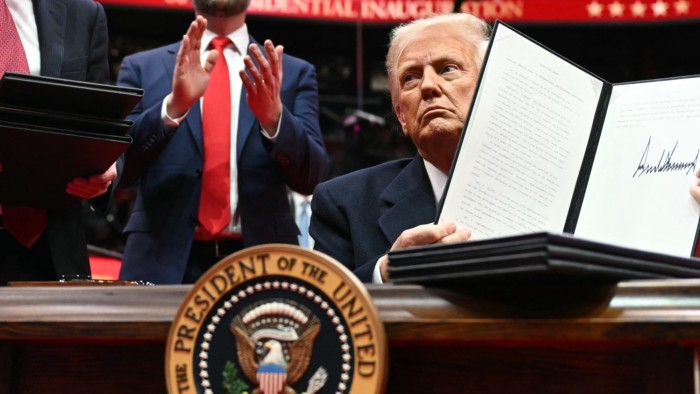
Indonesia, a significant contributor to global greenhouse gas emissions, has expressed skepticism about the effectiveness of the Paris Agreement. This concern follows the announcement by former President Donald Trump regarding the United States’ withdrawal from the climate accord.
Hashim Djojohadikusumo, Jakarta’s climate and energy representative, criticized the unfairness of emission reduction targets for nations like Indonesia, especially since the U.S. stands as the world’s largest historical polluter while not adhering to its climate responsibilities. He remarked, “If the U.S., the second-largest emitter after China, refuses to follow the global agreement, why should Indonesia comply?” These statements were made during a conference in Jakarta.
Recent discussions hinted at Argentina potentially considering exiting the Paris Agreement, which, if it occurs, would mark it as only the second nation to do so since the accord’s inception in 2015, which involved nearly 200 countries.
Trump’s administration saw the U.S. withdrawing from the Paris Agreement soon after he took office, a move previously executed during his first term. This recent decision has sparked concerns about its implications on global climate efforts, especially since no other countries opted to follow suit back then.
Djojohadikusumo emphasized the issue of fairness in emissions, stating, “Indonesia emits 3 tons per capita, while America emits 13 tons. Where is the justice in that?” His comments highlight a longstanding call from developing nations for more substantial action from wealthier countries regarding climate change.
As part of the Paris Agreement, all nations, including Indonesia, are expected to present new targets to lower emissions by February. However, many countries, notably within the EU, are anticipated to miss this deadline.
Indonesia ranks as the sixth-largest polluter globally, primarily due to its dependency on coal. The country generates about 66% of its electricity from coal and continues to develop new coal plants to support its growth, especially in energy-demanding sectors like nickel production, where it holds the title of the top supplier for electric vehicle batteries and stainless steel manufacturing.
President Prabowo Subianto has committed to phasing out coal by 2040, but analysts argue that this timeline is ambitious given Indonesia’s history of not meeting its climate objectives.
To meet its climate commitments, Indonesia would require a significant policy overhaul and substantial investments in renewable energy. Estimates suggest the country needs approximately $1.2 trillion by 2050 for clean energy technologies and $28 billion for retiring coal plants earlier than planned.
Hashim has voiced concerns that the previously agreed $20 billion financial program to assist Indonesia in transitioning away from coal would likely be terminated under Trump’s leadership, calling the Just Energy Transition Partnership a “failed program.”
The JETP was established in 2022 with the U.S. and Japan leading the initiative and was backed by promises of investment from financial institutions. However, funds have been minimally allocated, and the banking coalition has seen a decline in participation from key members.
While both parties agreed on an investment plan under the financing initiative, there are several ongoing disputes. Indonesia claims that donor nations have not provided funding for the early closure of coal plants and has also excluded certain off-grid coal plants from its emissions reduction strategy.
In light of Trump’s announcement to withdraw from the Paris Agreement, UN climate chief Simon Stiell described the transition to clean energy as the “economic growth deal of the decade,” inviting all nations to engage constructively within the framework of the agreement.