

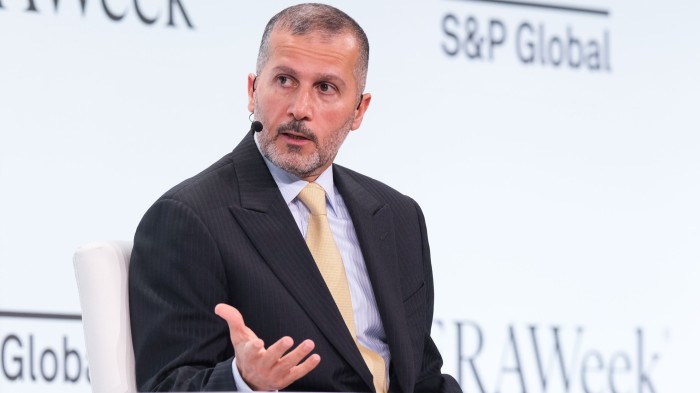
The United Arab Emirates (UAE) is looking to expand its nuclear energy projects internationally, with the United States emerging as a key focus for growth, according to the chief executive of the state-owned Emirates Nuclear Energy Company (Enec).
Since its inception in 2009, Enec has made significant strides in the nuclear sector, completing the Barakah nuclear power plant, the first of its kind in the Arab world, within 12 years and on budget. This project was developed in partnership with Korea Electric Power Corp.
Enec is now enhancing its investment and research teams to explore nuclear opportunities beyond the UAE, as highlighted by CEO Mohamed Al Hammadi. He indicated that the rise of artificial intelligence (AI) is contributing to an increased demand for electricity to support data centers.
“We are very interested in all markets,” Al Hammadi stated. “We aim to build on our successes and explore what we can achieve, both within and outside the UAE.”
Currently, nuclear power generates about 25% of the UAE’s electricity, with that figure rising to 60% in the winter months when demand for air conditioning decreases.
“We have accomplished what few have done in the past decade,” Al Hammadi remarked, noting that while he won’t compete directly with nations like China or South Korea, the UAE stands alone in its nuclear developments from the Middle East westward.
Enec has engaged in talks regarding investment in the UK’s Sizewell C project, although Al Hammadi did not confirm if the company would proceed, mentioning that negotiations have been ongoing in various phases over the past year.
The UK government has delayed its final investment decision on Sizewell C, previously anticipated last year, until after the upcoming government budget review in the spring. Notably, the cost estimate for the project has nearly doubled since five years ago.
Al Hammadi highlighted the rapid increase in nuclear power demand in the U.S., largely driven by the AI boom. “The energy demand is growing very quickly in the U.S., particularly with AI technologies,” he explained. “In the last 18 to 19 months, all available energy resources in the U.S. have been utilized, prompting interest in reviving older nuclear sites.”
When asked about Enec’s plans regarding nuclear power stations—whether the company intends to build, own, operate, invest in, or provide consultancy services—Al Hammadi responded, “All of the above.” He expressed flexibility regarding investments in both older reactors and new, smaller modular reactors.
“We have the experience and knowledge to structure deals effectively, manage complex projects, and ensure their completion on time and within budget,” he added.
Furthermore, Al Hammadi suggested that the UAE could assist in developing nuclear power stations in developing countries. This month, the UAE signed a $15 billion agreement for renewable energy projects in the Philippines, which is also exploring a potential nuclear partnership with Enec.
Philippine Energy Minister Raphael Lotilla noted, “We are in the final stages of establishing a regulatory framework for nuclear energy, which will facilitate our plans to integrate nuclear power into our energy strategy.”