

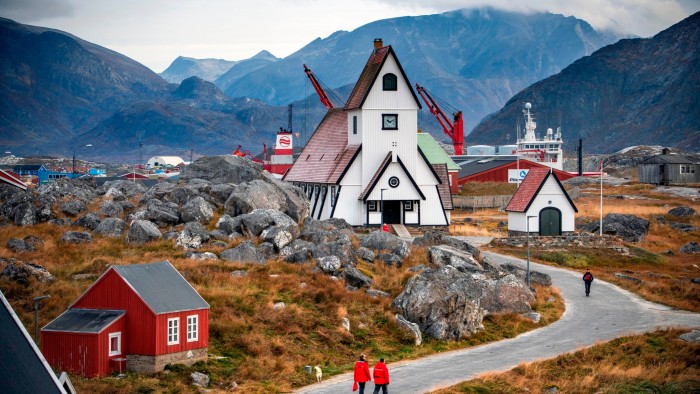
Greenland, the vast Arctic island, has been in the spotlight due to its rich mineral resources. As it seeks independence from Denmark, Greenland boasts significant deposits of metals and rare earth elements that are crucial for western nations, particularly as they look to reduce their reliance on China. This interest was notably amplified by former President Trump’s previous proposal to buy the island.
However, despite the excitement, Greenland has struggled to maximize its mining potential. Currently, it only has one operational mine producing anorthosite, which is primarily used in fibreglass and unfortunately runs at a loss.
Even after Trump’s bold proposal and local authorities expressing openness to American investment, only one U.S. company has secured an exploration license. In comparison, companies from Canada and the UK hold a far greater number of licenses. While climate change has made the island more accessible, many mining locations remain difficult to reach. Roderick McIllree, the executive director of 80 Mile, a mining company with projects in Greenland, noted that the past few years have been challenging for mining operations.
Most Greenlanders do not dream of being purchased by the U.S.; instead, they aspire for true independence. To achieve this, the island’s economy must expand significantly to compensate for the annual $550 million grant from Denmark. Mining and tourism are seen as key industries for growth, yet both face substantial hurdles. The tourist season is relatively short, infrastructure is lacking, and many areas are isolated without road connections.
Jørgen Hammeken-Holm, a government official in Greenland, emphasized the island’s potential, stating that while it offers unique opportunities, it’s not something that can be realized overnight and will require assistance.
Concern remains over potential competition from China, although visible Chinese mining activity has been minimal. One iron ore mining license was revoked for inactivity, and another project involving rare earths has been halted due to environmental issues. A Chinese effort earlier in the decade to build airports was also quashed under U.S. influence, leading Denmark to step in financially.
Presently, only Anglo-American is engaged in exploratory work in Greenland, which suggests that larger mining operations have yet to find a foothold.
The critical question is whether Trump’s renewed focus on Greenland will trigger the investment needed for mining development. Opinions vary; while McIllree sees the media attention as beneficial, he ruefully recognizes the lengthy and challenging journey of mining in the region.
80 Mile’s projects, which include minerals like copper, nickel, and helium, are seen as valuable long-term ventures but require substantial investment to launch. McIllree pointed out the need for government support, indicating that mining in Greenland is costly and aligns with U.S. financial backing.
Nevertheless, Greenland’s leaders remain divided on this interest. The island was previously positioned as a stable and politically safe choice for investments compared to riskier markets, yet questions about U.S. involvement could disrupt this perception. Some companies are reportedly inquiring about potential protections for their licenses.
Tourism has recently outperformed mining in generating revenue and is expected to continue doing so. Enhancements to Nuuk’s airport to accommodate international flights and the introduction of a New York route this summer hint at growing tourist potential. Still, high expenses, scarce infrastructure, and a short operating season are significant barriers.
In summary, while Greenland’s business potential appears vast, the reality remains complex and slow to unfold. For Trump and other investors, the challenge lies not only in making bold claims but also in fostering substantial business opportunities more rapidly.