

Interest is growing for small modular reactors (SMRs) as a viable solution for nuclear energy. Unlike traditional large nuclear plants that often exceed budgets and timelines, SMRs promise to bring efficiency and cost-effectiveness to the table.
For instance, the planned Sizewell C nuclear plant in eastern England is projected to cost around £40 billion, which is double the estimates from just a few years ago. This stark difference highlights the challenges faced by large nuclear projects.
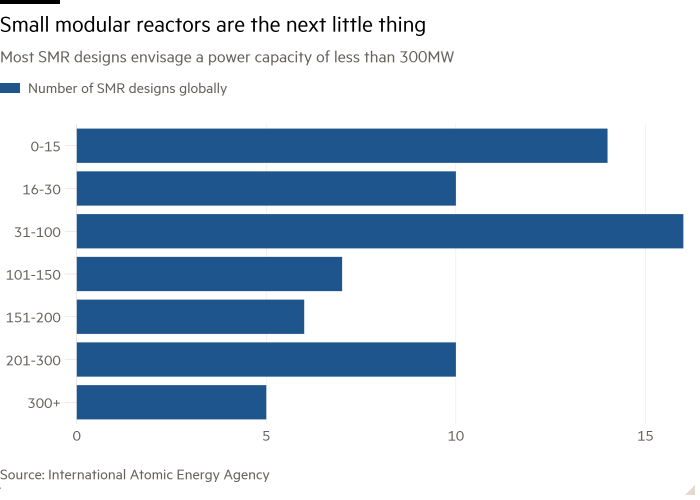
SMRs, which typically have a capacity of less than 300 megawatts, are primarily manufactured in factories, allowing for quicker construction times and reduced financing costs. Rolls-Royce, a major player in this field, estimates that their initial 470MW SMR will cost about £2.5 billion, with hopes to lower that to around £2 billion for subsequent units.
Artificial intelligence is also playing a significant role in the development and efficiency of these smaller reactors. Major tech companies like Amazon and Alphabet, Google’s parent company, are looking into how SMRs can support energy-intensive data centers. The UK government is developing an AI strategy that includes forming an energy council to explore investments in SMRs. Countries like Sweden and the Czech Republic, alongside the US, are also exploring this technology.
However, investing in SMRs comes with uncertainty. Most projects are not expected to be operational until at least the 2030s, and rising interest rates and supply chain costs could complicate financial forecasts. As Tom Betts from Aurora Energy Research points out, many expenses linked to nuclear projects become clearer through planning and consent processes.
Rolls-Royce is among four companies competing for government approval on two selected SMR designs by 2029. Yet, details on current costs remain scarce due to ongoing commercial negotiations.
Evaluations of the levelized cost of energy (LCOE) for SMRs vary, but most agree that initial costs will be higher compared to larger reactors. A report by Wood Mackenzie suggests that if SMR costs can drop to about $120 per megawatt-hour by 2030, they could become competitive with both large nuclear and fossil fuel plants.
Currently, many SMR projects rely on government funding, but private investors who favor nuclear energy might follow as the market matures. For now, the western SMR sector is still in its infancy, but as challenges are addressed, the role of small reactors in energy generation is expected to grow significantly.