

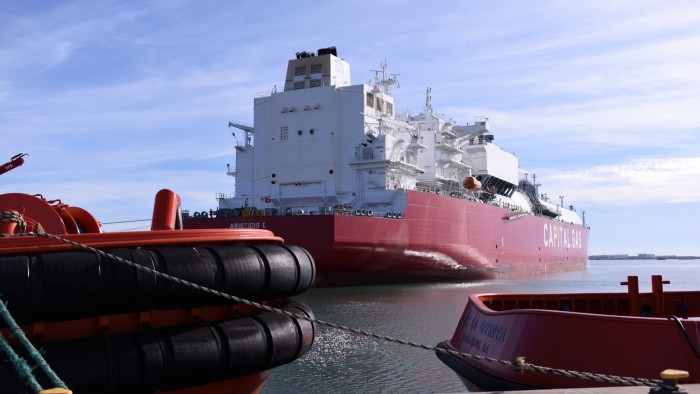
Donald Trump’s proposal to increase liquefied natural gas (LNG) exports could potentially add $1.3 trillion to the US economy. This move would allow the oil and gas sector to build new export facilities and pipelines, especially in the Gulf of Mexico.
S&P Global projects that LNG export capacity in the US will double within the next five years. This expectation aligns with Trump’s commitment to fast-track the approval of new export terminals and boost the industry.
Alan Armstrong, CEO of the gas pipeline company Williams, indicated confidence in significant contracts already in place with major LNG suppliers and anticipates securing more.
However, analysts warn that environmental regulations and legal challenges from environmental advocates could hinder the expansion of LNG.
Currently, the US has the largest LNG sector in the world and stands to gain significantly with the political shift. Trump has promised to reduce regulations and has assigned Doug Burgum, a former governor of North Dakota, as the new secretary of the interior, aiming to cut red tape.
Venture Global, a major US LNG player, plans to raise $2.3 billion through an IPO this month, potentially valuing the company at up to $110 billion as it capitalizes on the anticipated boom in energy exports under the new administration.
Last month, Venture Global marked a new milestone by shipping its first LNG cargo from its Plaquemines facility in Louisiana to Germany. Shortly after, Cheniere Energy announced its inaugural LNG production from a new facility in Texas.
Anatol Feygin, chief commercial officer at Cheniere, expressed confidence that the US will remain the top LNG exporter for years ahead.
Despite recording daily exports of 11.9 billion cubic feet in 2023, the LNG industry has faced tensions with the current administration, which paused new licensing for export terminals in January for a review. Trump intends to lift this pause immediately, although challenges may arise.
Mark Bononi, an analyst at Wood Mackenzie, stressed that while there are intentions to revive the licenses, regulatory and legal risks could complicate matters.
A Department of Energy analysis highlighted concerns that unchecked growth in the LNG sector could lead to rising domestic fuel prices and jeopardize environmental goals. Although Trump is expected to dismiss this report, it may provide a basis for environmental groups to contest new projects.
Nathan Matthews, a senior attorney from the Sierra Club, noted that if the administration ignores scientific findings, it could face legal repercussions.
Gillian Giannetti, a senior attorney for the Natural Resources Defense Council, argued that the Department of Energy must address these findings in their actions or provide a logical rationale for any deviation.
S&P forecasts that the LNG export capacity will double in the next five years, generating over $2.5 trillion in revenues for US businesses and $166 billion in federal and state taxes.
Additionally, the firm warned that failure to launch new or stalled LNG projects could lead to a loss of 100,000 jobs and a $250 billion hit to GDP, especially as competing countries like Qatar, Canada, and Mozambique expedite their own LNG initiatives.