

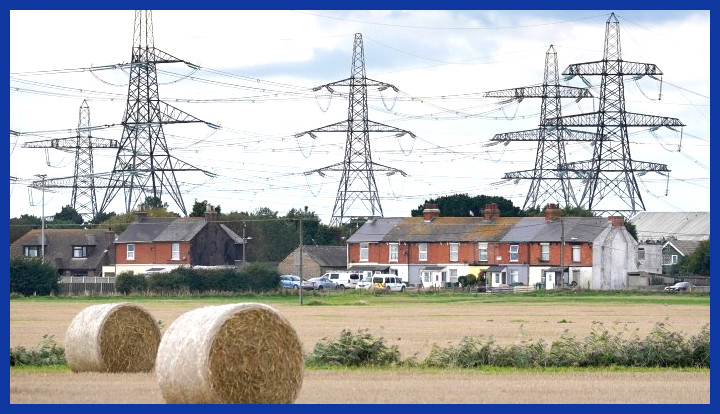
Ministers in the UK are looking at ways to limit the ability of local communities to oppose new pylons and wind farms as part of the push to make the electricity system greener by 2030.
The government is considering changes to planning laws that would allow judicial reviews of large infrastructure projects to happen only once per case. This move aims to address concerns from Energy Secretary Ed Miliband, who believes some groups are hindering necessary reforms.
On Friday, the government laid out its plans to achieve its goal of “clean” power within the next decade. The strategy includes reducing gas-fired power generation to under 5% of the total, down from around 30% currently, and increasing reliance on low-carbon energy sources.
Miliband emphasized that realizing this plan will require significant and bold changes, marking it as one of the most ambitious energy system overhauls in years.
To meet the clean power target, substantial investments in new wind and solar farms, as well as the related pylons and cables, are vital. The plan estimates the need for around 1,000 kilometers of new electricity networks on land.
However, officials are worried that local challenges could slow down progress. Many residents across the country are voicing objections to new pylons, citing environmental concerns and the potential impact on property values.
Typically, opponents seek judicial reviews of planning approvals, which allows them to ask a judge to reconsider the decisions. Often, these groups reapply multiple times even for the same projects.
In the Clean Power 2030 Action Plan, the government suggests finding ways to make the approval process more efficient to avoid delays in developing essential infrastructure. This may mean changing rules to allow only one request for judicial review per project.
The government aims to balance speeding up infrastructure development while still ensuring access to justice in accordance with legal obligations.
These proposals come after a review of legal challenges to large infrastructure projects by Lord Charles Banner KC. He recommended limiting the chances for claimants seeking judicial reviews.
Such changes could spark controversy, especially in communities that feel strongly about their rights to oppose developments.
The clean power action plan aligns with suggestions from the National Energy System Operator about necessary technologies to hit the 2030 targets. The government aims to ramp up offshore wind capacity to between 43 and 50 gigawatts by 2030, up from about 15 gigawatts now, alongside plans for more onshore wind and solar power.
Achieving this shift will require an investment of roughly £40 billion per year in energy.
To support these targets, the government is preparing for a significant bidding process for renewable subsidy contracts next year. There are also discussions about extending the duration of these contracts, which could be controversial since they are funded through consumer energy bills. Longer contracts may lower overall project costs by reducing risks for developers.
In an effort to garner local support for renewable energy, the government plans to ensure communities benefit directly from hosting infrastructure, potentially through funding for local projects, job creation, and reduced energy bills.
Coinciding with this plan, a government report highlighted disparities in the distribution of electric vehicle charging points, revealing that only 15% are located in rural areas. The report calls for improved accessibility and better placement of these charge-points.