

The EU’s leading energy official, who recently stepped down, has raised concerns about efforts to replace Russian gas imports through Ukraine by sourcing gas from Azerbaijan. As European energy companies engage in negotiations to continue gas supplies to Central Europe after the expiration of a crucial agreement with Russia’s Gazprom on December 31, this issue remains in the spotlight.
The proposed plan involves Azerbaijan supplying gas to the Ukrainian border, allowing for a complex exchange arrangement with Russia, which could benefit countries like Hungary and Slovakia. These nations have been resistant to the EU’s push to reduce dependence on Russian energy in light of the ongoing situation in Ukraine.
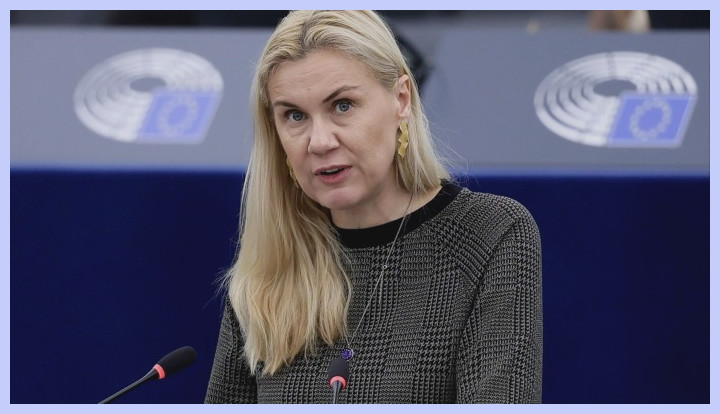
Kadri Simson, the outgoing EU energy commissioner, emphasized that this arrangement could simply allow Russian gas to continue flowing under the guise of Azerbaijani imports. She criticized the deal as unnecessary, arguing that European companies could directly purchase Russian gas at the Ukrainian border without this labeling.
Despite a commitment from EU countries to stop buying Russian fossil fuels by 2027, gas purchases are still allowed under current regulations. Simson pointed out that European companies can negotiate with Ukraine to continue acquiring Russian gas.
Concerns are growing about potential price increases during the winter if there is a sudden disruption in supply. European gas prices have more than doubled compared to pre-2020 levels due to previous supply constraints imposed by Russia in response to the EU’s support for Ukraine.
Gas imports through Ukraine constitute about 5% of the EU’s total supply, primarily benefiting Austria, Slovakia, and Hungary. However, Gazprom halted supplies to Austria recently after an unfavorable arbitration ruling against them.
As Hungary seeks new agreements with Gazprom for increased gas supplies next year, Ukrainian President Volodymyr Zelenskyy has indicated that discussions with Azerbaijan are ongoing, despite the ongoing challenges posed by Russian attacks on Ukraine’s energy infrastructure.
The prospect of Ukraine maintaining its role as a transit country for EU-bound gas seems to be diminishing, as Slovakian and Hungarian companies explore alternative routes for gas from Azerbaijan. Last month, Slovak gas company SPP initiated a pilot contract with Azerbaijan’s state energy company, hoping to establish a more robust arrangement.
Depending on the success of the trial project, future contracts may be possible. However, concerns remain regarding the transparency of gas origins, as it could be difficult for the EU to monitor whether Azerbaijan might be re-exporting Russian gas.
Ukrainian officials are skeptical about reaching a deal with Azerbaijan, though they have not confirmed any stalled discussions. This transit arrangement does provide some monetary benefits to Ukraine, earning approximately $1 billion annually in transit fees, but a termination could lead to significant losses for both Ukraine and Russia.
Ukraine’s Naftogaz confirmed that the contract with Gazprom will not be extended, and the country’s gas transit operator noted a lack of interest from European companies due to high insurance costs.
As winter approaches, uncertainty lingers over the gas supply situation in Europe, with Simson believing that EU countries will manage through the winter and refill gas storage in the spring, despite looming challenges.