

Hello and welcome back to Energy Source, broadcasting live from New York.
As the new Trump administration prepares to take office, there is growing attention on how it will reshape energy and climate policies. A significant part of this discussion involves a focus on expanding oil drilling and potentially rolling back mandates for electric vehicles. However, in a clear response from liberal states, California’s Democratic governor, Gavin Newsom, plans to introduce state tax incentives for those purchasing electric vehicles if the federal tax credit of $7,500 is eliminated under Trump’s leadership. Newsom stated, “We’re not turning back on a clean transportation future — we’re going to make it more affordable for people to drive vehicles that don’t pollute.”
In addition, Newsom might exclude Tesla from these new state incentives, signaling a rift with Elon Musk, a prominent ally of Trump.
Today’s primary topic centers around the vulnerabilities in the nuclear fuel supply chain following Russia’s restrictions on exporting enriched uranium to the U.S.
The Race to Rebuild the U.S. Nuclear Fuel Supply Chain
Last week, in Oak Ridge, Tennessee, Centrus Energy has resumed work on advanced centrifuge technology essential for producing nuclear fuel. This initiative aims to lessen U.S. dependence on Russian uranium supplies and is part of a $60 million initial investment, marking the first step in what could become a multi-billion dollar expansion of uranium enrichment facilities in Ohio.
Centrus is one of several U.S. companies vying for a piece of the $3.4 billion federal funding aimed at revitalizing American nuclear fuel production, which has been overshadowed by more affordable imports from Russia for years. Dan Leistikow, Centrus’ vice-president of communications, emphasized the urgent need to advance centrifuge manufacturing. The goal is to expand production capacity in anticipation of increased federal funding.
Centrus has already secured around $2 billion in initial supply contracts with U.S. utilities, which depend on further federal funding to enhance their production capabilities. The company is gradually restarting enrichment operations after overcoming a major financial crisis triggered by the Fukushima disaster in Japan in 2011.
The pressure to rebuild the U.S. nuclear fuel supply chain is intensifying as concerns grow regarding the continued availability of Russian nuclear fuel, especially considering the war in Ukraine. Russia currently holds a significant share of the global uranium enrichment capacity, making it a crucial player in the nuclear fuel market.
Constellation Energy, which manages the most extensive fleet of nuclear reactors in the U.S., has claimed to stockpile enough fuel to last until 2029. They have expressed the necessity of revitalizing domestic uranium processing capabilities to ensure an uninterrupted nuclear fuel supply.
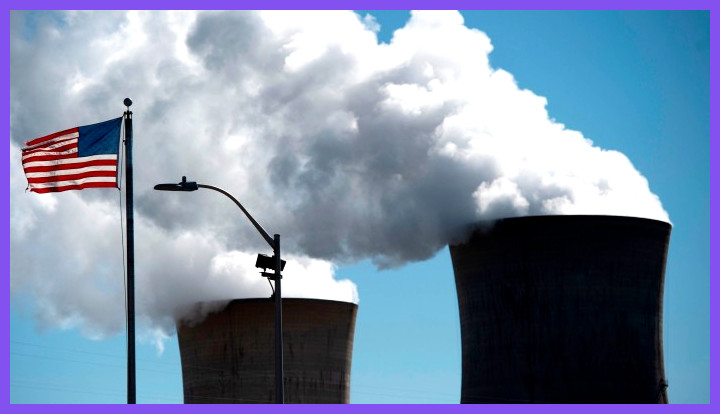
Additionally, renewed interest in nuclear energy is growing, driven by increased power demands from data centers and shifts toward electrifying transport. Notably, Constellation recently announced plans to resume operation at the Three Mile Island reactor, previously the site of a significant nuclear incident.
Nuclear technology is evolving, with companies like Holtec International securing funding to restart the Palisades power plant in Michigan by 2025. Major tech firms, including Amazon and Google, are entering partnerships to invest in small modular reactors, which utilize advanced fuels for enhanced energy output.
As the demand for enriched uranium in the U.S. is projected to rise significantly in the coming years, companies are racing to increase their production capabilities. However, these undertakings require government support and face considerable technological challenges. Ensuring a stable and secure nuclear fuel supply chain will be vital for the industry’s future success.