

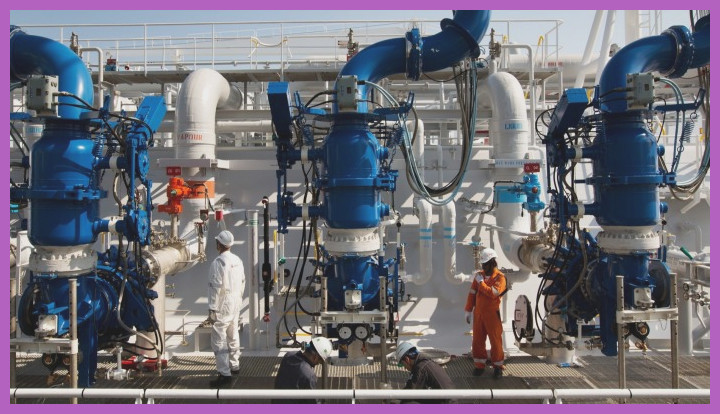
BP, along with its partners, has officially approved a significant gas project in Indonesia, estimated to cost around $7 billion. This venture is part of the broader Tangguh liquefied natural gas initiative in Papua, which has been exporting LNG to Asian markets like Japan and China since 2009. BP will manage 40% of the project and will cover that portion of the expenses.
The new project will focus on developing the Ubadari field, which is set to supply natural gas to the LNG facility. A key aspect of this initiative is the plan to enhance gas recovery by capturing carbon dioxide (CO₂) produced during the process. The CO₂ will then be recompressed and injected back into a nearby reservoir to maintain pressure.
This marks BP’s first attempt at a carbon capture, utilization, and storage project, with production slated to begin in 2028. Other notable partners involved in this project include China’s Cnooc and Japan’s Nippon Oil Exploration.
The decision to move forward comes during a time when BP, along with other energy firms, is reassessing its renewable energy goals and preparing for a future with fossil fuels remaining an integral part of the energy landscape. Since Murray Auchincloss took over as CEO in January, BP has renewed its focus on oil and gas operations. Recently, the company also put its U.S. onshore wind division, BP Wind Energy, up for sale, valued at about $2 billion. Shareholders anticipate further reductions in the company’s climate targets as well.
Major oil companies are increasingly prioritizing LNG, viewing it as a transitional fuel that can facilitate the shift from coal to renewable energy. Earlier this year, Shell projected a 50% increase in global LNG demand by 2040 as nations like China transition from coal to this relatively cleaner energy source.
However, some climate advocates argue against labeling gas and LNG as transition fuels. They highlight that while natural gas is cleaner compared to other fossil fuels, it still emits significant carbon dioxide when burned, and its primary component, methane, is a potent greenhouse gas that contributes to global warming, despite having a shorter atmospheric life.
Indonesia stands out as a key player in the LNG export market, being the third-largest exporter in the region, following Australia and Malaysia. The Tangguh LNG facility currently operates with a production capacity of 11.4 million tonnes, and the country is also working on the Abadi LNG project, which aims to produce 9.5 million tonnes and is expected to start operations in 2030.