

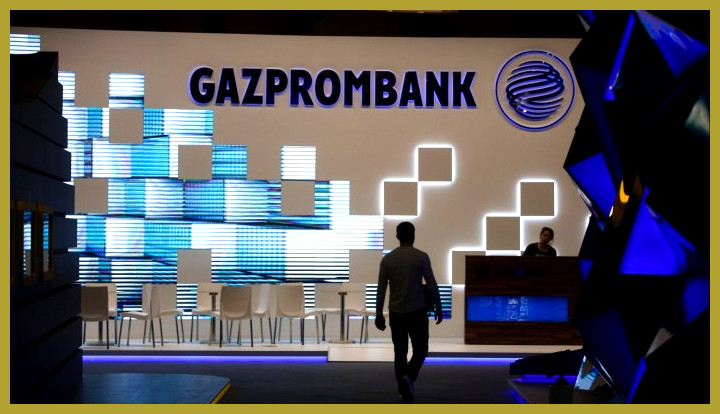
The United States has introduced sanctions against Gazprombank, a significant Russian bank, in an effort to hinder the Kremlin’s capacity to fund its military actions in Ukraine. This new measure announced on Thursday essentially bars Gazprombank, which plays a crucial role in Russian energy transactions, along with its six international branches, from accessing the global finance system dominated by the U.S.
According to U.S. officials, Gazprombank has been instrumental for Russia in acquiring military supplies, supporting soldiers, and compensating families of those killed in the ongoing conflict. U.S. Treasury Secretary Janet Yellen emphasized that this comprehensive action will complicate Russia’s attempts to circumvent U.S. sanctions and sustain its military operations. The U.S. is committed to continuing its robust measures against any financial avenues that support Russia’s actions in Ukraine.
The United Kingdom and Canada imposed similar sanctions on Gazprombank shortly after the war began in 2022. The U.S. had initially refrained from doing so to allow European nations to continue paying for Russian gas. However, the European Union has significantly reduced its dependence on Russian pipeline gas, decreasing from 40 percent to less than 8 percent of its energy needs.
These recent sanctions coincide with the expiration of contracts for Russian gas transit through Ukraine to several European countries, including Slovakia and the Czech Republic, on January 1. Following the destruction of the Nord Stream pipelines in 2022, this has become one of the last remaining routes for Russian gas to reach Europe. The Ukrainian government has stated it will not renew these transit contracts, indicating that Russian gas supplies will cease to be paid for in the near future.
Despite these challenges, a recent report from S&P noted that Russia is still selling around 70 percent of its liquefied natural gas to Europe, although at much lower volumes than before. The U.S. and U.K. have banned Russian LNG, while the EU still obtains about 20 percent of its LNG from Russia. Additionally, Germany has recently opted to reject Russian gas shipments, suggesting a shift in Europe’s energy strategy.
The U.S. sanctions are expected to cut off one of Russia’s last avenues for international banking by prohibiting Gazprombank from conducting transactions in U.S. dollars. Washington is also taking measures to dissuade foreign banks from engaging with Russia, with threats of secondary sanctions against those who facilitate transactions for the Russian military.
As part of this ongoing effort, the U.S. has warned banks in other countries of potential sanctions if they connect to Russia’s System for Transfer of Financial Messages, a project designed to function as an alternative to the Swift banking system.
These sanctions will further complicate Russia’s situation, as the U.S. has also targeted over 50 small Russian banks, numerous securities registrars, and several key officials accused of exploiting the financial system to fund the war. The impact of these sanctions has already begun to be felt, prompting Russia’s economy ministry to reduce its import forecasts for 2024 significantly. The Russian central bank has recognized the challenges posed by these sanctions, noting a substantial increase in costs and obstacles for businesses trying to conduct transactions for essential goods.