

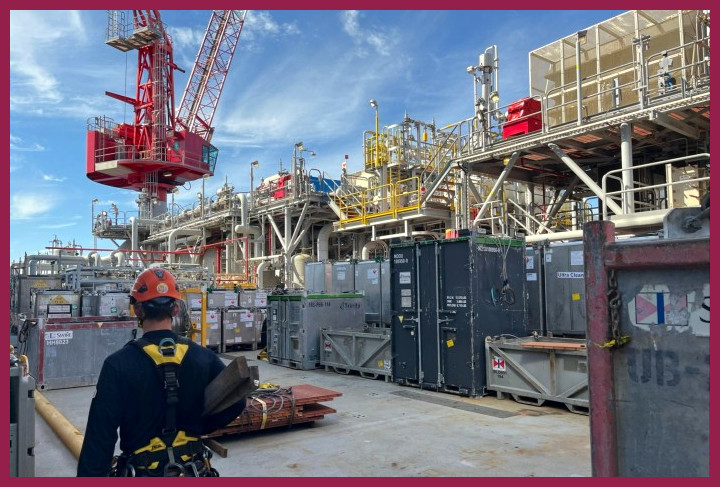
About 150 miles southeast of New Orleans, Shell’s latest oil platform, named Vito, stands tall amidst the Gulf of Mexico’s waves. This platform reflects a fresh strategy in offshore drilling not just for Shell, but for the entire industry.
Ireti Omotoso, Shell’s general manager for US growth assets, pointed out, “Vito signifies the future of our operations in the Gulf.” He added that the platform operates faster, has a leaner design, emits fewer emissions, and incorporates advanced technology compared to older models. “It achieves a lot with less,” he emphasized.
Vito is part of a new wave of offshore facilities aimed at boosting deepwater drilling investments in areas 150 meters deep, under the belief that the demand for oil will stay strong for the foreseeable future. The industry argues that advancements in technology and efficiency can significantly reduce the costs of deepwater operations while minimizing environmental impact during extraction.
The renewed enthusiasm for offshore drilling represents a comeback for an area that had fallen out of favor after infamous oil spills, declining prices, and the US shale boom gaining ground. The rising attention on offshore exploration marks a shift in trends as shale production has slowed, and the global oil market adjusts to rising prices following tensions like the invasion of Ukraine.
This situation has led to a flurry of new projects and investments as companies seek under-explored sources of oil and gas in Africa, South America, and Asia. “The 2020s are shaping up to be the decade for deepwater drilling,” said Espen Erlingsen, a senior partner at Rystad Energy.
Estimates suggest that companies might invest nearly $104 billion in deepwater projects this year, a steep increase from 2020 figures and the highest since 2016. This surge has also driven up demand for drilling rigs, which saw rental prices reach a nine-year high recently.
However, environmental activists are sounding alarms over the implications of this renewed focus on offshore drilling, voicing concerns over potential long-term impacts on the environment. They argue that such efforts undermine global commitments to reduce reliance on fossil fuels.
As leaders prepare for the upcoming UN COP29 climate summit, environmental groups insist that oil firms like Shell and BP are falling short on climate promises, risking an escalation in energy production that could lead to another disaster akin to the Deepwater Horizon spill that occurred in 2010. This disastrous event, which resulted in the loss of lives and extensive ecological damage, continues to haunt the industry.
Further, with recent political developments, like Donald Trump’s re-election bid and promises to ease environmental regulations, some analysts predict a cautious approach toward increasing oil supply as companies focus on maintaining shareholder returns.
The oil sector faces mounting pressure from advocacy groups urging a shift from fossil fuels. Mark van Baal, from the activist group Follow This, highlighted the urgency for a transformation away from hydrocarbons, criticizing companies for investing in long-term fossil fuel projects amid a changing landscape.
While there’s a remarkable potential for large profits, especially in regions like Guyana where significant oil finds are being explored, companies remain hesitant about loosening production too rapidly to prevent oversupply and price drops.
As the oil industry monitors challenges and opportunities, the Vito platform symbolizes both ambition and caution. It represents a new chapter in offshore drilling with advanced, streamlined operations being monitored from shore, utilizing high-tech support to minimize personnel offshore.
Nonetheless, this growth in deepwater drilling raises critical questions about long-term environmental impacts and regulatory measures, as experts emphasize the need for a careful approach to balance energy demands with ecological responsibility.
Despite advancements and technological progress, the complex relationship between oil production, environmental risks, and global energy policies continues to be a vital topic for industry analysts, leadership, and the public alike.