

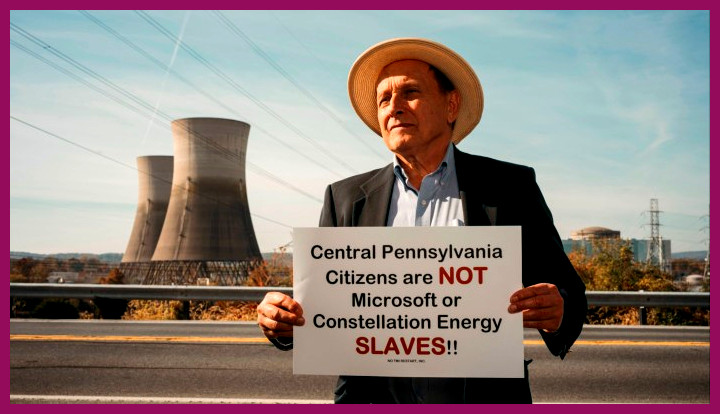
A coalition of long-time community activists is gearing up for legal action to prevent the reopening of the Three Mile Island nuclear plant in Pennsylvania. Their move reflects a significant test of public support for a revival of nuclear energy, which is backed by major tech companies and U.S. taxpayers.
Three Mile Island Alert, formed nearly 50 years ago to advocate for the plant’s closure following the worst nuclear incident in U.S. history, intends to challenge the necessary government permits sought by Constellation Energy, which has announced plans to restart operations in 2028.
This legal challenge is just one hurdle for the utility, which is working to fulfill the requirements of a 20-year power supply agreement with Microsoft. This ambitious $1.6 billion project holds the potential to symbolize the resurgence of nuclear energy in the United States.
To move forward, Constellation must secure various regulatory approvals, train a substantial workforce, and upgrade equipment amidst strained supply chains in the nuclear sector. Additionally, it faces the challenge of winning over local residents and the incoming administration of Donald Trump, emphasizing that the advantages of reopening the plant must outweigh any associated risks.
Eric Epstein, the chair of TMI Alert and a former history professor, expressed skepticism about the timeline. He stated, “The restart is not going to happen by 2028: that is pure fantasy.” Epstein also highlighted ongoing safety concerns, pointing out the current state of reactor two, which remains highly radioactive and has not been properly cleaned up since the accident.
The second reactor at TMI was shuttered in 1979 following a partial meltdown, which caused widespread public panic and undermined trust in nuclear safety protocols. The first reactor was closed down in 2019 due to economic pressures from cheaper natural gas production.
The demand for electricity is expected to double over the next decade, largely driven by the growth of data centers and the shift towards electrified transportation. This demand surge, paired with the push from tech giants and the Biden administration, is fueling renewed investment in nuclear energy.
In a major step, Holtec International secured a $1.5 billion federal loan to aid in the restart of the Palisades nuclear power plant in Michigan, which had been dormant since 2022. Concurrently, tech companies like Google and Amazon have entered contracts to explore small modular reactor technology, which is considered to reduce construction risks compared to traditional large reactors.
The U.S. Department of Energy is reviewing loan requests totaling $65 billion from companies aiming to establish new reactors, with Constellation contemplating a $1.6 billion federal loan guarantee to support TMI’s restart efforts.
Another U.S. utility, NextEra, is considering the revival of a nuclear facility in Iowa, which was closed in 2020. Analysts believe that rising prices for emissions-free electricity, which tech companies are willing to pay to meet their climate targets, could sustain a sector previously in decline following Japan’s Fukushima disaster in 2011.
According to investment bank Jefferies, Microsoft is paying about $110 to $115 per megawatt-hour for power under its agreement with Constellation, nearly double the standard prices in the area. Constellation’s chief generation officer, Bryan Hanson, noted that growing awareness of climate change is driving demand for carbon-free electricity, prompting companies to resurrect projects like TMI to help reduce their carbon footprints.
During a recent visit to TMI, Hanson assured stakeholders that the company was capable of avoiding delays and budget overruns experienced by other nuclear projects. While the facility’s iconic cooling towers are now neglected and overgrown, he pointed out that necessary upgrades primarily entail routine maintenance, aside from a planned $100 million replacement of the main power transformer.
Safety remains a critical focus as regulators prepare to make their final decisions regarding TMI’s potential restart, especially after the 1979 partial meltdown. A different company, Energy Solutions, is now responsible for the decommissioning and cleanup of the site where the accident occurred.
Patricia Longenecker, an 81-year-old anti-nuclear activist who has lived nearby since the accident, voiced her concern and anger upon learning of TMI’s reopening plans. She described the announcement as “a punch in the gut” and expressed her belief that industry priorities favor financial gain over public safety, especially considering the lack of a permanent waste disposal site.
While Constellation claims that a recent survey indicates 57% of Pennsylvania voters support TMI’s reopening, local opposition persists. Supporters, such as trade unions and businesses, anticipate job creation and economic benefits. Joe Gusler from the Pennsylvania State Building Trades expressed enthusiasm for the middle-class jobs that the project would generate, acknowledging the incident of 1979 but distinguishing it from the current reactor operations.
However, significant regulatory challenges remain for TMI as illustrated by the recent rejection of an Amazon Web Services data center request by federal regulators, citing concerns about potential instability in power supply. Constellation maintains that this decision will not negatively impact their agreement with Microsoft, as the TMI restart would enhance power availability on the grid.
Hanson expressed confidence in the possibility of meeting Microsoft’s timeline for supply access, stating, “2028 is doable.”