

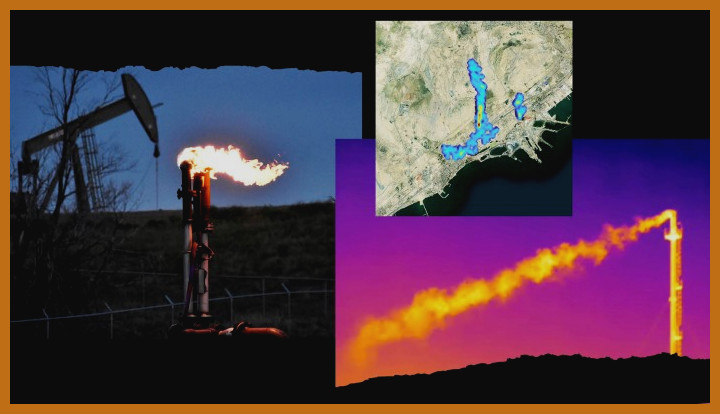
On the shores of the Caspian Sea, very close to the ongoing COP29 climate summit in Baku, a significant environmental issue is unfolding. A strong greenhouse gas, methane, has been leaking into the atmosphere from oil and gas facilities.
Recent observations from sensors on the International Space Station revealed six distinct methane plumes recorded between April and June, all linked to oil and gas operations near Baku. Carbon Mapper, a California-based nonprofit, confirmed that several additional leaks were found throughout Azerbaijan, including near major sites like the Sangachal oil and gas terminal. These emissions, although varying in intensity, are toxic and harmful, releasing not just methane but also carcinogenic substances.
This problem isn’t unique to Azerbaijan. Globally, oil and gas plants are grappling with methane pollution, whether from accidental leaks or intentional venting. Experts highlight that methane is a significant contributor to ground-level ozone, which causes respiratory illnesses and fatalities worldwide. Even more alarming, over a 20-year period, methane is about 80 times more effective than carbon dioxide at trapping heat in the atmosphere. It has been implicated in approximately 30 percent of global warming since the industrial revolution.
While natural sources like wetlands and volcanic activity do contribute to methane emissions, human activities—especially agriculture, waste management, and fossil fuel extraction—are the primary culprits. Until recently, tracking methane emissions has been challenging due to its colorless and odorless nature. Historically, measurements were taken using handheld devices or via aerial surveys.
Energy companies have often concealed the full scope of their methane emissions. Experts like Eric Kort from the University of Michigan note that many oil and gas producers emit far more methane than previously acknowledged.
As the discussions on tackling climate change continue at COP29, Azerbaijan aims to announce initiatives to address methane emissions from organic waste. However, significant emissions from the oil and gas sector are not at the forefront of discussions. With energy-sector emissions at record levels in 2023, analysts argue that the oil and gas industry holds a critical potential to mitigate climate change.
The Global Methane Pledge was introduced at the 2021 COP summit with over 150 countries promising to cut emissions by 30 percent by 2030 from 2020 levels. However, recent data show that global methane emissions are still rising.
In response, governments and organizations are turning to advanced satellite technology for better monitoring, with the EU implementing regulations requiring fossil fuel companies to keep track of methane leaks. Riley Duren, CEO of Carbon Mapper, mentions that new satellites have already detected emissions from various regions worldwide.
There’s growing concern that without accurate data and prompt action, it will be difficult to rein in methane emissions. Paul Bledsoe, a former climate adviser, states that we’re only beginning to understand the full extent of the challenge.
Despite the public focus on carbon dioxide, methane remains the second largest contributor to global warming. Recent studies indicate that methane levels are now at their highest in over 800,000 years. Scientists also warn that rising global temperatures could worsen methane emissions from natural sources like wetlands and melting permafrost.
Efforts are underway in the energy sector to reduce emissions, but many companies face criticism, as historical data shows emissions continue to climb. Methane flaring, which can be avoided, still occurs widely, making tracking complicated.
Demand for stricter regulations is increasing, particularly within the EU, which will extend its methane measures to external businesses by 2027. In the U.S., new regulations for methane pricing could also be announced soon.
Concerns loom over whether upcoming elections may hinder progress on climate initiatives. Experts urge major emitting countries like the U.S. and China to take clear steps towards methane reduction, as achieving climate goals, especially limiting temperature increases to 1.5 degrees Celsius, hinges on effectively addressing methane emissions.