

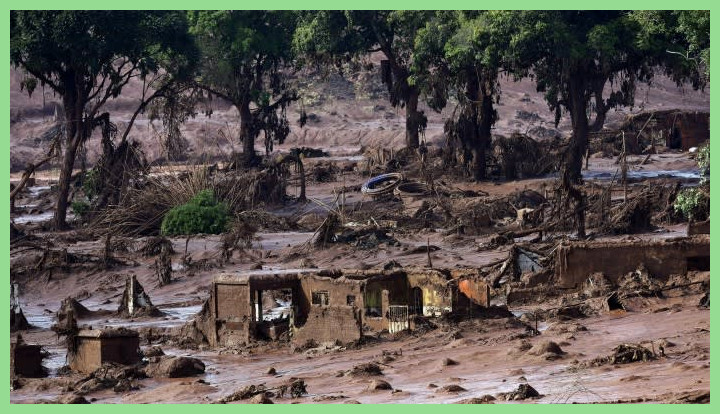
In a historic and unprecedented move, the largest mass lawsuit in the annals of English legal proceedings is set to unfold this coming Monday, pitting the mining giant BHP against a staggering multibillion-pound claim. This legal tempest revolves around approximately 620,000 alleged victims ensnared in one of Brazil’s most catastrophic environmental calamities.
Nearly nine years have elapsed since a dam at an iron-ore mining site near Mariana ruptured, unleashing torrents of toxic sludge that tragically claimed the lives of 19 individuals. Now, as the dust of that disaster settles into the backdrop of legal intricacies, a long-anticipated courtroom battle for redress will commence in London.
Eve of trial musings reveal that BHP and its Brazilian counterpart, Vale, have upped their game, proposing a revised settlement offer of $23.8 billion, higher than the earlier $18 billion estimate. However, this overture has been rebuffed by UK law firm Pogust Goodhead, representing the plaintiffs, who lambasted the gesture as a “desperate attempt” to dodge accountability.
This case represents a complex tapestry of high-stakes litigation weaving through England’s courts, a phenomenon largely fueled by the burgeoning presence of litigation finance firms. Tom Goodhead, co-founder of Pogust Goodhead, asserted that this legal encounter would afford victims an “opportunity for accountability and justice.” His sentiments resonate deeply, echoing the hopes of those seeking restitution for their profound losses.
With the eyes of the world upon them, the proceedings may ultimately serve as a critical litmus test for the accountability of multinationals when tragedy strikes ordinary lives. Goodhead articulated that the trial could demonstrate that victims of corporate misdeeds now possess pathways to justice, allowing them to confront these powerful entities on familiar ground.
In the aftermath of the disaster, which occurred in November 2015, BHP Billiton was listed on both the London and Australian exchanges, holding a non-operational stake in Samarco, a joint venture with Vale. Following shifts in corporate structure, BHP’s primary operations now reside in Australia.
Voices from Brazil echo in support of the legal endeavor. Thiago Alves, head of MAB—an organization dedicated to supporting victims of dam failures—emphasized the significance of enabling victims to approach the corporate behemoths head-on, claiming their rights in a jurisdiction that might provide a fair hearing.
Yet, this lawsuit has ignited a fierce debate regarding the emerging practices of London’s claimant law firms and the litigation funding sector. BHP vehemently criticized the proceedings, arguing that they merely replicate compensation frameworks already established in Brazil, with a considerable share of any potential payouts poised to enrich lawyers and funders rather than the victims themselves.
Financial backing for the lawsuit comes from Gramercy, a U.S.-based alternative asset manager, which has led BHP to denounce the actions as unnecessary and misaligned with the interests of those affected. Kenny Henderson, a partner at CMS not directly involved in the case, underscored that while “long-arm jurisdiction” of English courts is neither novel nor surprising, the enormity of this litigation sets it apart.
The costs of such legal warfare, with an unparalleled number of claimants, are expected to soar into the hundreds of millions. Indeed, by the end of initial proceedings—set to extend into next year—Goodhead predicts the claimants’ legal expenses could reach around £250 million. The question of potential payouts, however, remains tantalizingly elusive, anticipated to unfold in subsequent hearings.
BHP’s legal artillery includes the elite law firm Slaughter and May, with heavyweight barristers appointed to its defense. Curiously, Chief Executive Mike Henry has no plans to testify, though the courtroom might see former CFO Peter Beaven share his insights.
The staggering scale of the plaintiffs includes 2,000 businesses, 46 municipalities, and 65 religious organizations, framing a total claim value at a jaw-dropping $36 billion—though this represents a “high-water mark,” flawed by subjective estimations of loss that would necessitate stringent proof should the court find BHP liable for any damages.
The legal strategies being deployed are complex, bifurcated into two main arguments. The first predicates that BHP’s substantial 50 percent interest in Samarco imbues it with strict liability for the calamity’s aftermath, relieving claimants from the burden of proving fault. The second argument posits that BHP shares liability based on its alleged role in inflating iron ore production amid plummeting prices, leading to a disregard for dam safety protocols.
BHP refutes both allegations, contending Samarco operated independently, with its own decision-making framework. Furthermore, the mining titan staunchly claims ignorance of any prior safety breaches concerning the dam.
Yet, the legal quagmire thickens, with BHP disputing the timeliness of certain claims, questioning the plaintiffs’ legitimate standing in the UK courts, and asserting that many parties had previously signed waivers absolving it of liability.
To date, BHP and Vale report expenditures exceeding $7.9 billion on reparations and compensation through the Renova Foundation, established to address the profound impacts of the disaster. Despite these expenditures, the companies continue negotiating additional remedies with Brazilian authorities.
Ahead of this critical trial, BHP reiterated its commitment to finalizing an equitable compensation and rehabilitation plan focused on benefiting impacted Brazilian communities and ecosystems. Nevertheless, claims from Goodhead underscore a stark inadequacy in prior compensatory efforts, with many victims receiving abysmally scant yields.
With the specter of lengthy legal skirmishes ahead, Alves noted the community’s mixed emotions—interspersed with indignation, exhaustion, but intertwined with remarkable resilience. The road to justice might be long and tortuous, but for many, hope flickers amidst the rubble of past tragedies, as they seek restoration, accountability, and ultimately, justice.