

Key Highlights:
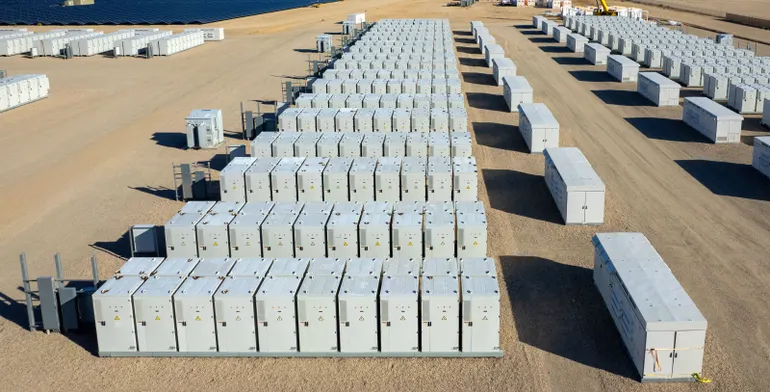
- Eversource Energy, National Grid, and Unitil have submitted long-term contracts for three energy storage projects that aim to deliver 1,068 MW/4,472 MWh of capacity in Massachusetts by 2030, as reported by the utilities and the Massachusetts Department of Energy Resources.
- The projects consist of Jupiter Power’s 700 MW/2,800 MWh Trimount, alongside Flatiron Energy’s 250 MW/1,000 MWh Energizar and 168 MW/672 MWh Salt Cod projects. When completed, these projects will provide clean energy during peak times and help ease transmission issues in Greater Boston and southeastern Massachusetts, where Eversource is testing localized virtual power plants to manage power supply better.
- These agreements are part of Massachusetts’s goal to deploy 5 GW of energy storage by 2030, with plans for an additional 5 GW by 2035, reflecting the state’s commitment to add 15 GW of non-emitting capacity to the power grid.
Project Overview:
The selected projects were part of a solicitation for battery power capacity aimed at generating sufficient energy to enhance the state’s electricity grid. A fourth project, Rhynland Energy’s 200 MW River Mill Storage, also emerged from this process but is still in discussions for a long-term contract.
The second solicitation currently seeks 250 MW to 300 MW of additional energy storage. Further RFPs are planned, targeting a total of 3,500 MW of energy storage capacity by mid-2030.
According to financial assessments, these projects are expected to slightly lower monthly energy bills for most customers over the next 5 to 15 years.
Among the projects, Jupiter Power’s Trimount stands out as the largest, anticipated to be New England’s biggest energy storage facility when it goes live later this decade. It will provide 200 MW for Fitchburg Gas & Electric Light and 500 MW for National Grid. The facility will be located on a 20-acre site at a former oil terminal in Everett, north of Boston, linking to the local Mystic substation to improve grid reliability.
Flatiron Energy’s Energizar project, situated in Chelsea, will further support grid stability and optimize the use of local renewable energy, with operations expected to kick off in early 2027. Meanwhile, Flatiron’s Salt Cod project is projected to begin operating by late 2028, based on a site that once hosted coal and oil-fired power generation before closing in 2010.