

Google is moving forward with a new initiative to install what are known as CO2 batteries, aimed at providing clean and reliable backup power for its data centers in locations like the United States, Europe, and parts of Asia. This announcement is part of a broader effort to enhance energy solutions for technology needs.
Ainhoa Anda, Google’s senior lead for energy strategy, mentioned that the company has been exploring various energy solutions globally. CO2 batteries are designed to store excess renewable energy, serving a similar purpose to lithium-ion batteries. However, they potentially offer larger capacity and adaptability, making them more versatile for different locations.
The challenge for Google lies not only in finding long-term energy storage solutions but also in ensuring compatibility with diverse regional requirements. Anda emphasized that standardization is a key element appreciated in developing these systems.
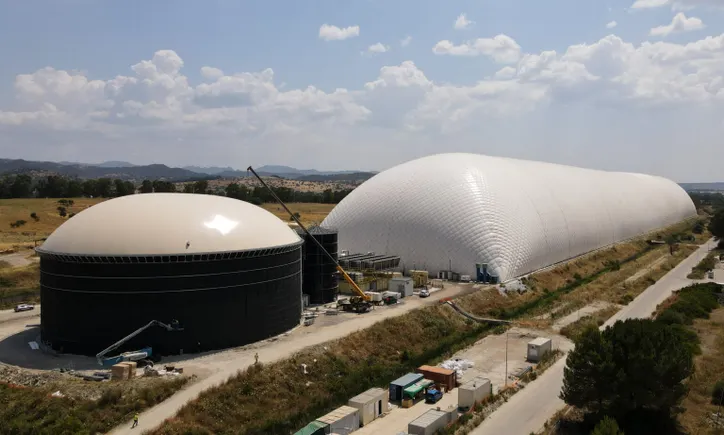
Google has partnered with an Italian company called Energy Dome, which has successfully created a CO2 battery facility in Sardinia, Italy. This facility can hold 2,000 tons of CO2 captured from gas production. The stored CO2 can be transformed into electricity by compressing and expanding it, generating significant power when needed.
Google plans to replicate such units near its data centers to ensure a continuous supply of renewable energy, even during times when other sources might not be available. Currently, lithium-ion batteries are the primary backup power source for data centers, but they can only sustain power for a limited time—typically 4 to 8 hours—which often isn’t sufficient for longer energy demands.
CO2 batteries, on the other hand, can last up to three times longer than lithium-ion batteries and are projected to be cheaper to operate. They also provide an advantage over traditional large-scale energy storage methods, like pumped hydro systems, which require specific geography and extensive land use, and can take a decade to build.
The construction of Energy Dome’s facility illustrates the rapid deployment potential of CO2 batteries—it took less than two years to complete, with key elements constructed in record time.
However, Google anticipates some resistance from local communities, especially due to the size of the facilities, which may resemble sports stadiums. Concerns about CO2 release in case of accidents have been raised, though Energy Dome’s CEO assures that emissions would be minimal compared to other industries.
Beyond Google, other organizations are also exploring CO2 battery technology. For instance, Alliant Energy in Wisconsin has received approval to build a CO2 battery that will supply power to 18,000 homes.
Failed to publish!