

A Year of Change in Energy Policy Under Trump
As Donald Trump completes a year of his second term, his influence is notable. However, his efforts to reshape the energy landscape are facing significant challenges. Major oil companies like ExxonMobil are hesitating to follow his directives, particularly when it comes to increased activity in Venezuela. Recent court decisions also hinder federal attempts to promote clean energy projects.
Despite a drop in investments in green energy linked to the administration’s shift, the long-term trend toward renewable energy is still progressing.
Renewable Energy: A Resilient Trend
Trump has promised to boost fossil fuel production, criticizing renewable energy as a “scam.” Yet, analysts from his own energy department see a different future. This week, the US Energy Information Administration (EIA) released forecasts for the energy sector, predicting electricity demand will rise due to a boom in AI-driven data centers.
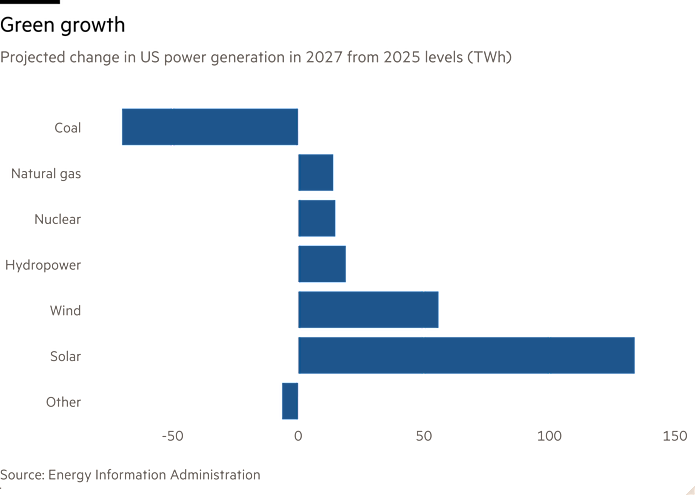
Interestingly, while demand climbs, fossil fuel generation is expected to decline. Coal production may drop by 9.6%, overshadowing a modest rise in natural gas. Oil output is also forecast to decrease, largely due to competitive pricing from Gulf states.
On the other hand, renewables are set to thrive despite federal policy challenges. The EIA forecasts a remarkable 46% increase in solar energy production and a 12% rise in wind energy over the next two years.
This growth trajectory illustrates a consistent shift in the energy mix, with renewables increasing their share of US power generation from 11% in 2020 to an expected 18% last year.
A major contributing factor to the rise of renewables, especially solar and onshore wind, is their relatively quick deployment. Solar farms can be operational in under a year, contrasting with the lengthy construction times for natural gas plants.
While the Trump administration argues that renewables are expensive and unreliable, advancements in technology are proving otherwise. Reports indicate that the cost of solar electricity has dropped significantly, making it more affordable than traditional fossil fuel sources.
Moreover, improvements in battery technology help mitigate the intermittent nature of solar and wind, allowing for greater integration into the grid. The US is witnessing a surge in battery storage, with a forecasted addition of 22 gigawatts in the coming year.
Though the green energy sector has undoubtedly faced setbacks over the past year due to reduced tax incentives and higher tariffs, overall long-term growth remains promising. While new policies could pose challenges, renewable energy in the US continues its upward momentum amidst the existing turbulence.
Conclusion
In conclusion, despite challenges from federal policy, the renewable energy sector is on the rise. As the nation progresses towards a more sustainable energy future, innovations and market dynamics will play key roles in shaping this transformation.