

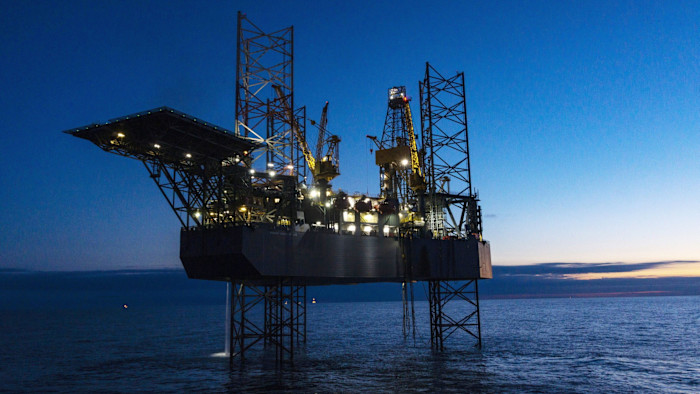
The UK oil and gas sector faced its toughest year in exploration during 2025, with investments expected to drop even more as companies paused plans in the North Sea, waiting for clarity on government tax strategies.
Energy consultancy Wood Mackenzie reported that no new exploration wells were drilled in UK waters this year, marking a first since the discovery of oil and gas in the 1960s.
Investments, which stood at £4.4 billion in 2025, are forecasted to plummet by over 40%, falling to about £2.5 billion next year. This would represent the lowest investment level since the industry was rocked by high costs and inflation in the 1970s.
“Drilling is at an all-time low,” stated Gail Anderson, a research director at Wood Mackenzie, predicting further consolidation among operators due to a high tax rate of 78%.
Despite the absence of new exploration, there were 36 appraisal and development wells drilled in the North Sea, which is half the number from 2020, the pandemic’s first year.
“Activity was terrible in 2025 because there was so much uncertainty,” remarked Martin Copeland, CFO of North Sea producer Serica.
Looking ahead, many executives believe that 2025 and 2026 may represent the lowest point. They anticipate a rise in investment in UK waters as the market prepares for a more favorable tax system starting in 2030.
The North Sea is in a long-term decline, with production decreasing from a peak of 2.3 million barrels per day in 1983 to just 530,000 barrels today.
Many major oil firms have reduced their stakes or exited the basin altogether to chase more profitable ventures, leaving smaller independent companies in charge.
The industry attributes part of its struggle to the energy profits levy introduced by the previous Conservative government in 2022, which imposes additional taxes on profits when oil prices exceed $76 a barrel.
While oil prices have remained below this threshold for most of 2025, gas prices earlier this year surpassed the level that triggers the tax.
Forecasts indicate that receipts from the energy profits levy will shrink significantly, from £2.9 billion in 2024-25 to just £300 million by 2029-30, as companies either optimize their tax strategies or exit the basin.
Linda Cook, CEO of Harbour Energy, commented on the harsh fiscal environment, saying, “It’s the worst in any country where we operate,” suggesting that the UK is competing with one arm tied behind its back.
The Labour government has promised that once the energy profits levy expires in 2030, additional taxes will only affect oil sold above $90 a barrel and gas at 90p a therm.
James Midgley, an oil and gas analyst, expressed optimism about the future: “What replaces the EPL is a pragmatic system, which will work for all parties,” allowing companies to start investing in 2027.
Copeland added that Serica would focus on straightforward opportunities for the time being, but criticized the UK government for not using the North Sea to bolster economic growth.
Despite potential future investments, Cook warned that the UK remains a challenging environment for oil and gas. Major projects have faced delays due to legal proceedings, with uncertainty remaining over their progress.
She stated, “Every other country I visit asks how they can encourage more investment. In the UK, the conversation feels the opposite. I struggle to understand why, as long as the UK requires oil and gas, it doesn’t support local production.”
The government has expressed its commitment to a sustainable future for the North Sea, aiming for record investment in clean energy while managing existing oil and gas fields during the transition to greener energy sources.