

Hello and welcome to Energy Source. Today, we focus on the unfolding dynamics of investment as Saudi Arabia looks to inject $1 trillion into the US economy.
Recently, the US President welcomed Saudi Crown Prince Mohammed bin Salman in a lavish ceremony. This warm reception sparked criticism from human rights advocates, especially in light of US intelligence reports linking the crown prince to the murder of journalist Jamal Khashoggi in 2018.
Despite these controversies, the visit led to a series of high-profile agreements celebrated at a dinner attended by influential figures in business and energy sectors, including Elon Musk.
Among the notable deals is a partnership between MP Materials—a rare earths company—and Saudi Arabia’s state mining firm, alongside significant investments like a $900 million funding round for the video startup Luma AI. Overall, Saudi Aramco indicated it had signed 17 agreements potentially worth over $30 billion, including a nuclear cooperation pact that excludes enrichment, easing fears around nuclear arms development.
Oil prices also responded to a new peace initiative involving the US and Ukraine, highlighting a potential reduction in risks tied to Russian oil sanctions.
In technology news, ExxonMobil and BASF have joined forces to explore a promising method for producing clean hydrogen called methane pyrolysis. This method converts methane into hydrogen and solid carbon without generating CO2 emissions, presenting a potential breakthrough in hydrogen production.
The two companies plan to build a demonstration plant in Texas, leveraging their extensive experience in the industry to develop this cleaner hydrogen solution.
Methane pyrolysis distinguishes itself from conventional processes, as it requires significantly less electricity and no water. By utilizing existing natural gas infrastructures, companies can minimize deployment costs, making this approach a more attractive option in the US, especially with low natural gas prices.
While recent advancements have raised hopes for scaling this technology, challenges remain. Some start-ups are making exciting strides to improve efficiency through new catalysts, bolstering the push for more sustainable energy solutions.
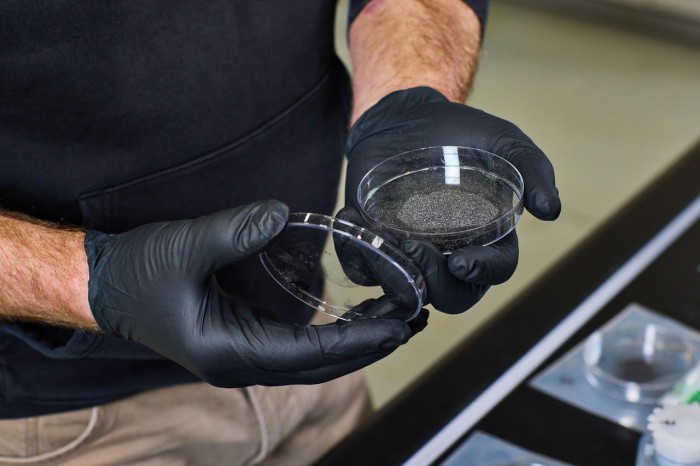
For instance, Molten Industries, founded by Stanford graduates, is harnessing renewable electricity to produce battery-grade graphite and clean hydrogen. Their innovative approach uses a toaster-like heating system to break down methane, producing hydrogen and beautiful graphite flakes.
Similarly, Monolith, another start-up, is developing a plasma pyrolysis process to manufacture carbon black, used in various industries. They’ve formed partnerships with major companies like Goodyear, although they have faced funding hurdles.
In conclusion, as the energy landscape evolves, the fusion of technology and investment presents both challenges and opportunities in achieving a more sustainable future.
Thank you for joining us today.