

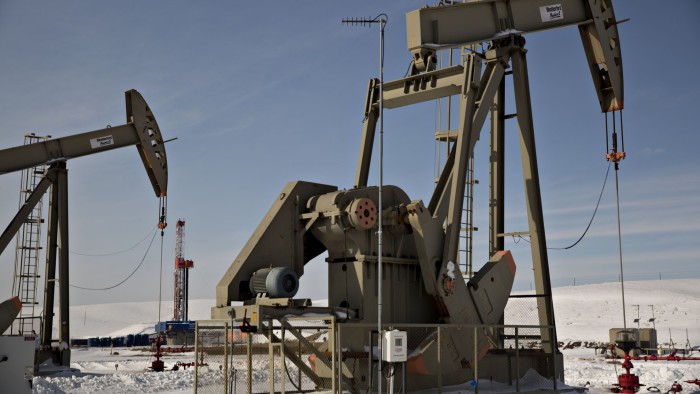
US shale oil producers are currently facing a significant challenge as crude prices have sharply declined due to the ongoing trade tensions initiated by Donald Trump. This rapid drop in prices has left many in the industry worried about their financial stability.
Since Trump’s announcement of new tariffs, oil prices have plummeted by 16%. Many Texas producers, who need prices to remain above a certain level to sustain their operations, are now fearing that some may have to stop their drilling activities altogether.
The price for West Texas Intermediate, the benchmark for US oil, slid to below $60 per barrel, exacerbating concerns within the industry. Kirk Edwards from Latigo Petroleum noted that this situation feels reminiscent of the 2020 price crash that resulted in a number of bankruptcies within the shale sector. He pointed out that both scenarios involve a decrease in demand and increased supply from major oil producers like Saudi Arabia.
Edwards stressed the urgency of the situation, warning that if prices do not bounce back soon, particularly in the Permian Basin—critical to US oil production—devastating consequences could follow.
Local oilfield worker Andy De La Rosa echoed these concerns, recalling similar patterns from price crashes in the past. He expressed worry over the current state of oil prices, recalling fears similar to those in 2015 that led to significant layoffs and cutbacks in production.
Bill Smead, chief investment officer at Smead Capital Management, expressed that the current tariff issues have created a tumultuous environment for investors in oil and gas. He suggested that if the oil price falls to $50, the industry could see a major consolidation, with stronger companies absorbing smaller, struggling ones.
The recent sell-off in oil prices has also been accompanied by volatility in global equity markets, leading to significant losses for shale producers like Occidental Petroleum and Devon Energy in just a matter of days.
While the situation is not as severe as the price crash during the pandemic, where oil prices briefly fell below zero, it poses serious challenges to an industry that had begun to recover from those lows. Analysts predict that continued low prices could lead to a decrease in production, which would be a setback for the recovery trajectory established since then.
As concerns grow regarding recent developments and the strategic decisions made by the current administration, many industry leaders are urging a thoughtful approach to ensure the stability and growth of the shale sector moving forward.