

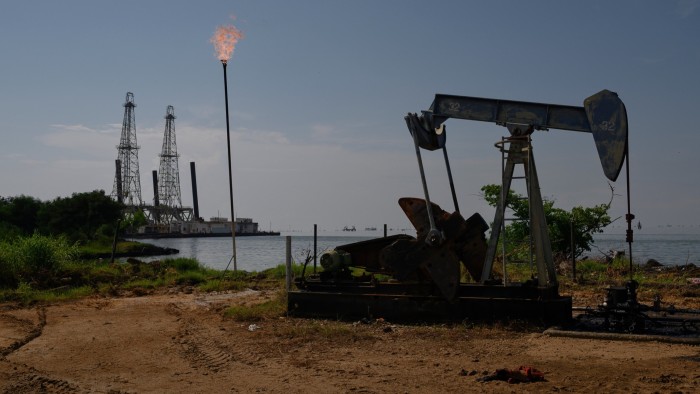
Trump Intensifies Pressure on Venezuela’s Oil Industry
In a significant shift in strategy, President Donald Trump has ramped up his “maximum pressure” campaign against Nicolás Maduro’s government in Venezuela. This move poses serious consequences for Venezuela’s crucial oil sector.
Earlier this year, the Trump administration announced plans to revoke Chevron’s license to operate in Venezuela, alongside similar actions against other Western oil companies. Recently, Trump introduced a 25% “secondary” tariff on oil imports from any country dealing with Venezuela, a drastic step taken amid further tariffs targeted at various sectors.
Oil companies are expected to cease operations in Venezuela by May 27, but the secondary tariffs, which went into effect on April 2, can be imposed sooner based on decisions made by Secretary of State Marco Rubio. This article will explore the implications of these policies on Venezuela’s oil industry.
The Impact on Chevron
Chevron’s withdrawal from Venezuela would significantly harm the country’s oil production. The company operates a joint venture with Petróleos de Venezuela (PDVSA), and together they account for about 25% of the nation’s oil output. The joint venture has played a key role in increasing production, which had previously dropped to alarming levels.
Despite having the largest proven oil reserves globally, Venezuela’s production faced dramatic declines due to issues like corruption and U.S.-imposed sanctions. Production fell from about 2.5 million barrels per day in 2016 to approximately 400,000 by 2020, but the collaboration with Chevron helped it rebound to around one million barrels per day last year.
Chevron has also been providing PDVSA with diluent, a necessary substance to process heavy crude oil. Losing access to this liquid could create major problems for Venezuela’s oil extraction and transport capabilities.
Revisiting the Tariffs’ Implications
Although Europe and India may refrain from purchasing Venezuelan oil without U.S. approval, China remains Venezuela’s largest buyer, accounting for over half of its oil exports. Much of this oil is transferred through black market channels, utilizing various intermediaries to bypass detection.
In addition to conventional sales, China often accepts Venezuelan oil as repayment for debts. The recent secondary tariffs aim to complicate these transactions, raising questions about whether China will heed any form of U.S. directive regarding its purchases.
Experts warn that if China perceives a genuine threat from these tariffs, it could lead to a significant dip in Venezuela’s oil exports. However, China’s evolving industrial landscape, with a shift towards electric vehicles, could also decrease its demand for Venezuelan oil.
Internal Conflicts within the Trump Administration
Trump’s renewed focus on Venezuela’s oil sector marks a shift from his earlier administration’s approach. Initially, Trump’s envoy, Richard Grenell, made a surprising visit to Maduro, which raised hopes among oil companies that their licenses would not be terminated.
The return of the “maximum pressure” policy indicates a division within Trump’s team, juggling deal-making interests against hardline foreign policy positions led by figures like Rubio. Observers emphasize the need for caution, as shifts in policy could resurface should tensions continue between these factions or if external conditions warrant a change in strategy.
This dynamic highlights the delicate balance that the Trump administration seeks to maintain regarding its Venezuela policies, indicating that the situation remains fluid and complex.
Power Points
The Energy Source newsletter is crafted by a dedicated team committed to providing accurate insights into the energy sector. For any feedback or inquiries, reach out to us.