

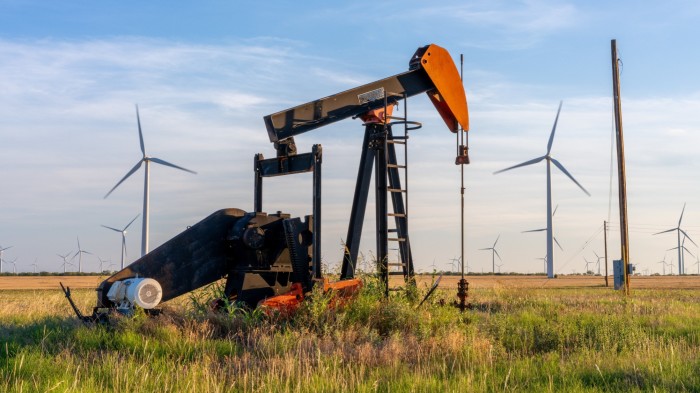
The price of Brent crude oil has fallen below $60 a barrel for the first time in four years, largely due to the impact of Donald Trump’s global import tariffs and the escalating trade conflict with China. Early trading in London showed prices at $58.60, marking a significant drop of about 18% over the past week as Trump continues to implement his tariff strategy.
The last time oil prices dipped below this threshold was in February 2021. Analysts are expressing concerns, noting that the situation is worsening rather than improving. Amrita Sen from Energy Aspects stated, “We are looking at a much weaker global growth and oil demand scenario, and that’s getting reflected in the current prices.”
US tariffs on Chinese imports have now reached as high as 104%, prompting China, the world’s second-largest oil consumer, to retaliate with additional tariffs on US goods. The ongoing trade wars between the two largest economies are raising fears of potential recessions.
Compounding the situation, Opec+, a coalition of oil-producing nations led by Saudi Arabia, has decided to increase oil production by around 411,000 barrels per day. This decision has added further downward pressure on oil prices. Disagreements among Opec+ members regarding their previous production cuts have been a source of tension, particularly with Kazakhstan consistently exceeding its output limits.
Helima Croft, head of commodity strategy at RBC Capital Markets, highlighted the dual effects of trade war apprehensions and Opec’s production increase. She pointed out that the market is still dealing with the aftermath of previous oil price wars, such as the significant price drop during the pandemic lockdowns.
Despite the escalating trade tension and falling oil prices, President Trump has welcomed the decrease, viewing it as a way to reduce costs for American consumers. However, this drop poses a challenge to many US oil producers, who may struggle to operate profitably at current prices.
Experts warn that producing oil at $60 per barrel is becoming increasingly difficult for American companies. The Trump administration appears to favor even lower prices, pushing for crude to fall to $50 or beneath, with trade adviser Peter Navarro stating this could help alleviate inflation.
Yet, many in the oil industry may not support such a direction, as producing at $50 per barrel is not seen as economically viable. BP and Shell have experienced declines in their stock prices, with BP shares dropping by 6% and Shell by 4%, underperforming compared to the FTSE 100 index, which closed 3% lower.