

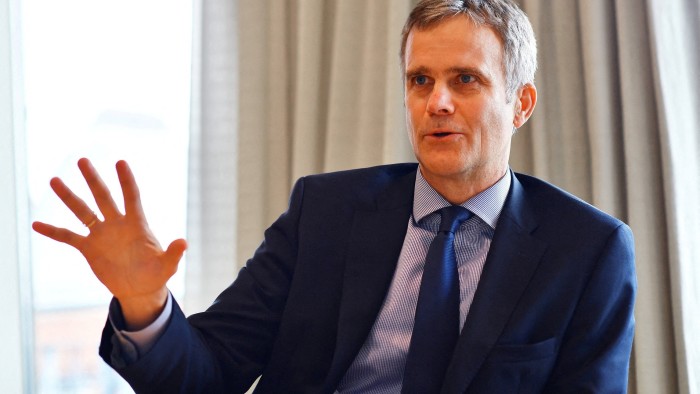
In a significant move, Helge Lund, the chair of BP, has announced his decision to resign, a step many view as inevitable after a tumultuous period in which the oil giant attempted a shift away from fossil fuels, only to retreat from those plans this year due to pressure from the activist group Elliott Management.
On Friday, BP revealed that Lund has informed the board of his intention to step down, likely in 2026. The search for his successor will be led by Dame Amanda Blanc, the board’s senior independent director.
Lund’s exit follows a February decision by BP to abandon its ambitious five-year strategy aimed at transforming the company into a green energy leader. This reversal came after Elliott disclosed a near 5% stake in BP and began advocating for major changes, citing a prolonged period of poor performance.
Elliott believed that BP’s revised strategy still fell short. They have been reaching out to various BP shareholders for their views. One seasoned BP investor indicated that while Elliott was critical of Lund, they stopped short of demanding his resignation, acknowledging that his departure had become necessary after seven years in the role.
By announcing a succession plan at this stage, BP may be attempting to head off a potential vote against Lund’s reappointment at the upcoming annual general meeting on April 17, according to two prominent shareholders who hinted they were ready to vote against him.
The shareholders expressed concerns about Lund’s leadership, especially noting the reversal of BP’s strategy in 2020 and what they perceived as his lack of urgency in addressing BP’s challenges. “He doesn’t inspire confidence,” said one investor, suggesting Lund’s demeanor during meetings felt indecisive.
BP stated that it has engaged with about 75% of its institutional shareholders since February, receiving overall support for its new direction and a request to act swiftly on its plans. The company noted that the topic of Lund’s position had not come up consistently.
When Lund took over as BP’s chair in 2019, he had two main tasks: to find a new CEO and to develop a strategy for transitioning the company in line with evolving energy needs. However, his efforts encountered setbacks. Lund’s choice for CEO, Bernard Looney, was let go in 2023 due to undisclosed past relationships with colleagues. Moreover, the ambitious green energy shift he had championed was effectively scrapped earlier this year.
Lund had appointed Murray Auchincloss as the new CEO following Looney’s departure, but Auchincloss has also struggled to improve BP’s unsteady performance. He remains linked to the previous strategy and has faced challenges rebuilding trust among investors, even as he has shifted focus back to oil and gas in recent months.
Some shareholders have raised concerns about how Lund divided his attention between BP and Novo Nordisk, the pharmaceutical company he’s chaired since 2018, which has seen its share price drop sharply since last summer.
Lund recently announced plans to add two new directors to BP’s board, increasing its size in an effort that some viewed as a move to bolster his standing amid Elliott’s heightened scrutiny. However, after the reversal on their green energy strategy, other board members acknowledged that Lund’s position had become precarious.
Analyst Biraj Borkhataria from RBC Capital Markets noted that most investors were not surprised by Lund’s decision to step down. Many investors held Lund responsible for the previous strategy’s failures, which led to several years of disappointing share price performance.
In his statement, Lund remarked that the time had come to initiate the search for his successor to ensure a smooth transition. Dame Amanda Blanc affirmed that she would conduct a thorough search for a new chair who possesses the credibility and experience to lead BP through its next chapter.